



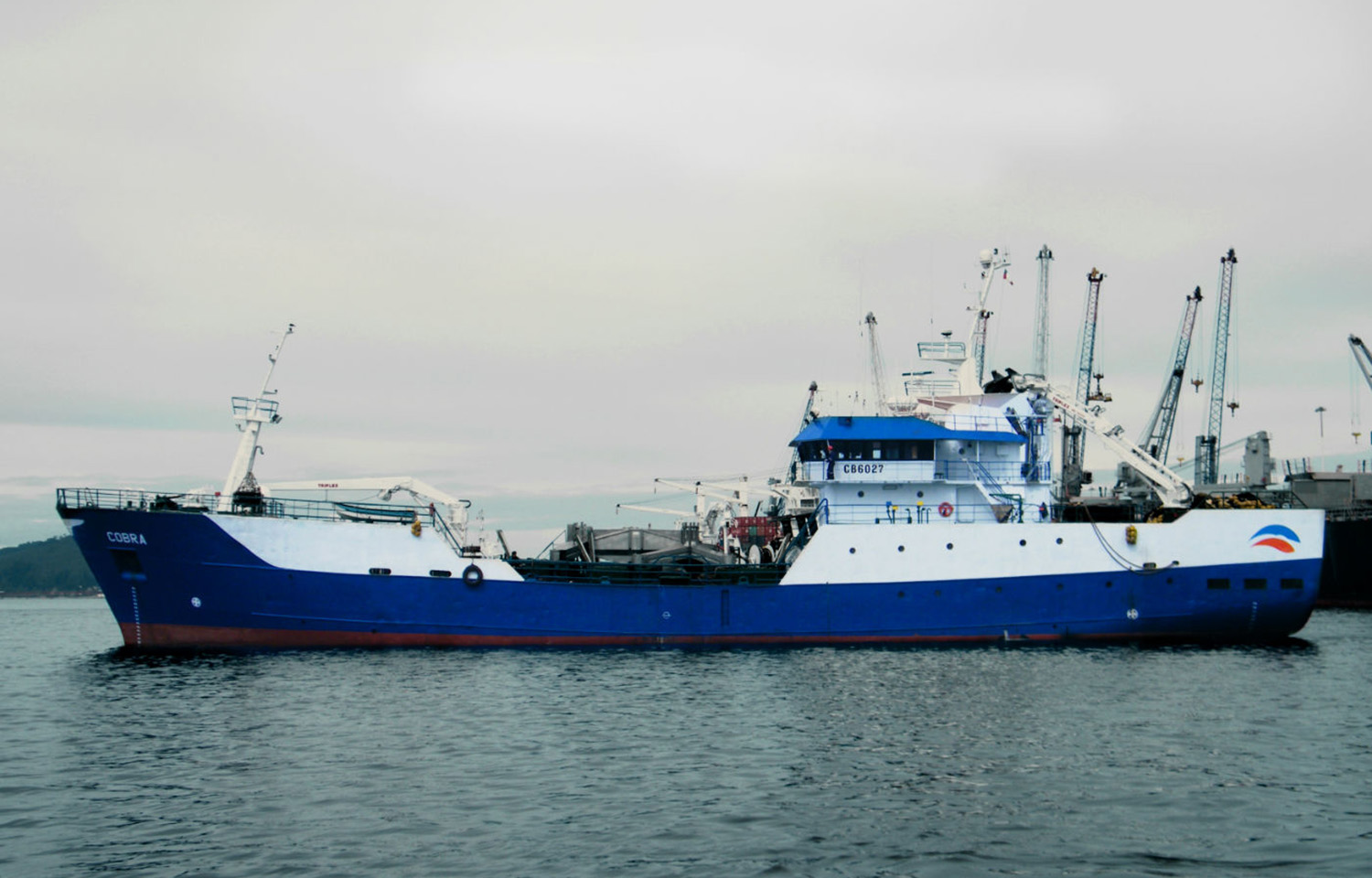
A Chilean prosecutor has confirmed certain crew members of the fishing vessel Cobra have been charged in connection with the shipwreck of the artisanal boat Bruma, an event which is presumed to have killed its seven crew members.
Chilean prosecutor of the Bío Bío Region, Marcela Cartagena, confirmed that certain crew members of the Cobra will be charged in connection with a suspected collision between it and the Bruma. The accident took place on the night of 30 March off the coast of the town Coronel, in central-southern Chile’s Bío Bío Region.
According to reports from the public prosecutor's office, information from the Chilean Navy indicated that the "Cobra" was the closest vessel to the crash site. The ship was seized for inspection, and an expert assessment of its hull and electronic equipment reportedly discovered it had traces of paint and other elements that could correspond to the crashed boat.
As a result of the inspection the prosecutor is alleging the Cobra collided with the artisanal vessel. The vessel’s members have since admitted they heard a noise of some sort but never suspected they had been in an accident.
“There is information that says the crew on the bridge at the time heard a noise, and the crew immediately began investigating the cause of the noise, always attributing it to something that could have occurred internally on the ship, whether it was a loose door or a gate, but never suspecting the possibility that they had collided with a boat,” Blumar CEO Gerardo Balbontín said during a nationally televised press conference on 8 April. “What the crew heard was a noise; they didn’t feel a collision. They heard a noise and always attributed it to something that had happened inside the ship.”
When asked for what type of crime the crew members would be charged, Cartagena said the investigation is ongoing.
"Answering that would be telling you that we have a hypothesis, and we don’t. It is a range of possibilities from a quasi-criminal [matter], eventual homicide, culpable homicide, omission of assistance, and a series of other things,” she said. “Some [crew members] are witnesses, others have been accused.”
Cartagena did not offer any more details, but did note that similar inspections are being carried out on at least two other vessels.
To date, the bodies of the missing fishermen have not been found.
“This is a painful issue, so we call on everyone to act responsibly and carefully. It is easy to elaborate and disseminate theories, but that only impedes the investigation and clarification of the facts,” Balbontín said in a company statement.
Blumar said it is collaborating on all fronts so that authorities can clarify the events that could have caused the sinking of the artisanal boat, including investigations into whether the vessels kept their safety systems activated and in operation. In the meantime, the company has contracted a firm specializing in underwater rescue and has provided technological equipment to the area to facilitate searches at greater depths for the missing fishermen.
Balbontín also reiterated that the company informed the authorities that the vessel has all the operational and certified technology that is necessary to navigate on the high seas and complies with current regulations. The Cobra had a crew of 18 trained professionals, led by a captain with more than 40 years of experience.
“Our captain has helped other vessels and crews in the past, being recognized by his colleagues,” the CEO said, noting that crews in fishing vessels of any size know it is their duty to help other vessels and colleagues in trouble.
“It hurts to hear many of the accusations circulating, such as that they would have intentionally collided with the Bruma,” Balbontín said. “Or worse, that following the accident they would have decided, deliberately, not to help the fishermen. We believe that these accusations do not help at all and they also do not acknowledge how seafarers work.”
The Cobra’s crew included the captain, two pilots, and two lookouts tasked with observing the ocean and the vessel’s surroundings, he said, adding that it would be difficult for the total crew of 18 to be hiding details of an accident of this magnitude.
The situation has become more complicated as one of those two lookouts from the Cobra crew has gone missing since the incident. The crew member, 58-year-old Juan Sanhueza, has been missing since Friday, 4 April when he was supposed to go to a Blumar-arranged psychologist appointment with other crew members before heading to the prosecutor's office to testify.
“We are deeply dismayed and worried, and we remain hopeful that he can return soon,” Balbontín said during the press conference. “We have been actively collaborating in the search – work that will also continue.”
In the meantime, the Lo Rojas de Coronel Association – which provides docking services to 500 artisanal fishers in Coronel – announced on 6 April that its members had unanimously voted to suspend all services to Blumar.
The association said the decision was made in solidarity with the families of the seven missing fishermen.
“We deeply regret their loss and the lack of clarity regarding the matter. We have decided to suspend all operations until this matter is clarified and the hundreds of hypotheses … which have emerged in recent hours, are unraveled,” the association stated.
