



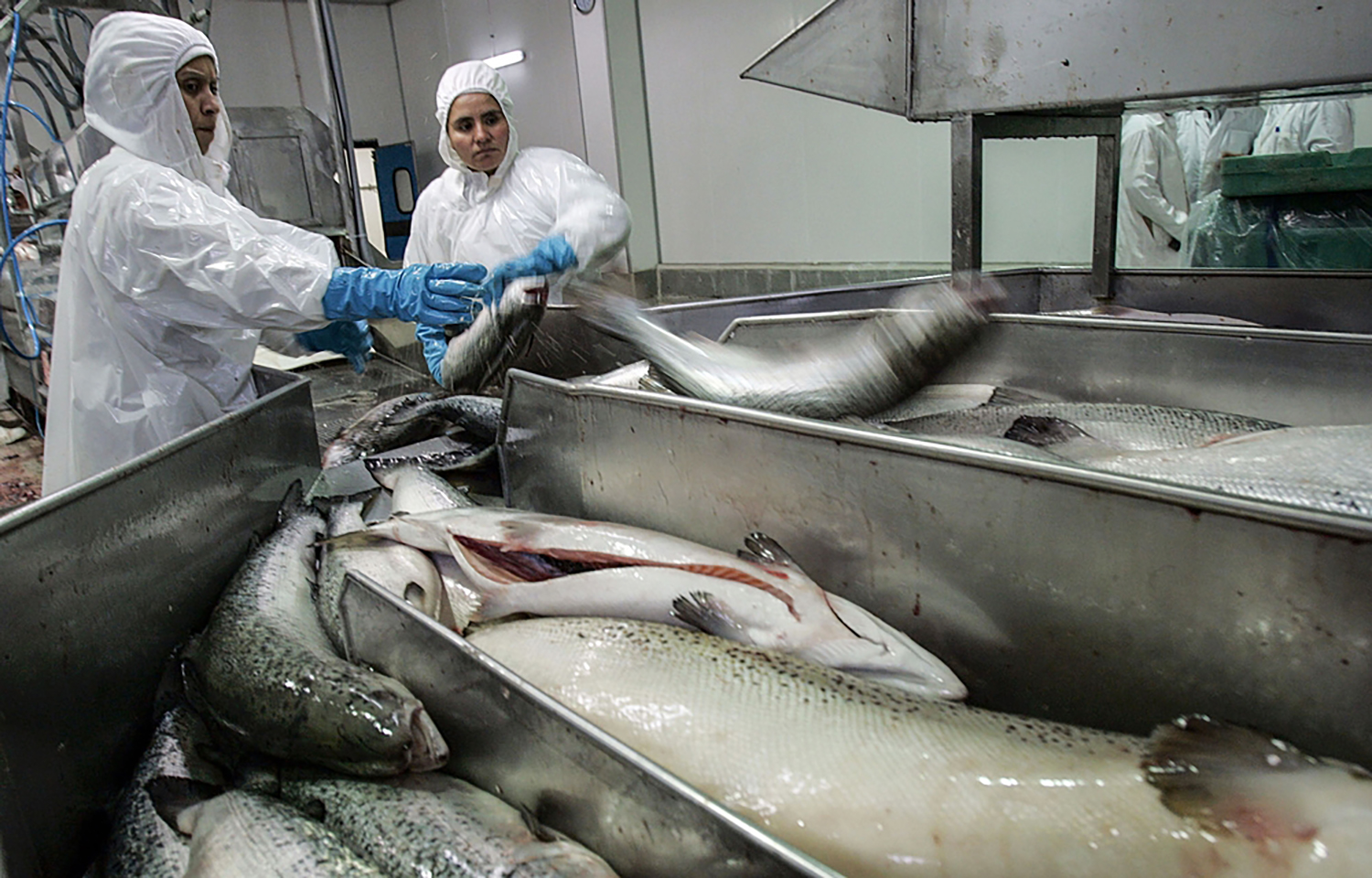
Chilean salmon companies have begun to request refunds for duties paid in the United States following a court ruling that struck down the tariffs on imports, including salmon shipments .
The U.S. Customs and Border Protection (CBP) opened a voluntary refund process after the U.S. Supreme Court ruled that President Donald Trump’s use of the International Emergency Economic Powers Act (IEEPA) to justify his tariff program, which began affecting imports in April 2025, was illegal.
Chilean salmon companies began to request refunds for tariffs paid for exports to the United States under the CBP’s process, which allows affected companies to request the refund of tariff payments and associated interest corresponding to U.S. imports made between 5 April, 2025 and 24 February, 2026.
The measure directly impacted the Chilean salmon industry considering that the United States is its main destination market, accounting for about 40 percent of exports in value.
Firms that have already started applications under the CBP mechanism include Salmones Camanchaca, AquaChile, and BluGlacier, local paper El Mercurio reported. BluGlacier is a partnership formed between Blumar and Ventisqueros to specifically address the U.S. market.
During the presentation of its results for the first quarter of 2026, Salmones Camanchaca reported that it will request a refund of approximately USD 15 million (EUR 12.9 million).
For its part, the conglomerate Agrosuper, AquaChile's parent company, reported in its financial statements that it has already filed the corresponding declaration to benefit from the restitution mechanism.
Chilean Salmon Council Executive President Loreto Seguel highlighted the CBP mechanism as encouraging for the country’s salmon industry.
“The tariff refund is a positive signal, because it reflects the institutional functioning in the United States and provides greater certainty for a strategic industry for Chile, which today [produces] the second most exported product in the country,” she said.
Regarding the economic impact that these tariffs had, “these higher costs were absorbed by companies and directly affected the competitiveness of the industry in international markets,” Seguel said.
Return payments are expected be made between 60 and 90 days after the declarations submitted by the companies are accepted.
Trump announced in February that he planned to impose the 10 percent tariff using Section 122 after the U.S. Supreme Court invalidated his previous sweeping tariff action. A recent U.S. Court of International Trade decision found the use of Section 122 was also illegal, however those tariffs are still being applied as the case makes its way through U.S. courts.
Trump had previously justified tariffs on almost every country in the world, announced on his “Liberation Day” in 2025, using the IEEPA, and after that was ruled out by the court, he switched tactics to Section 122 of the Trade Act of 1974.
