






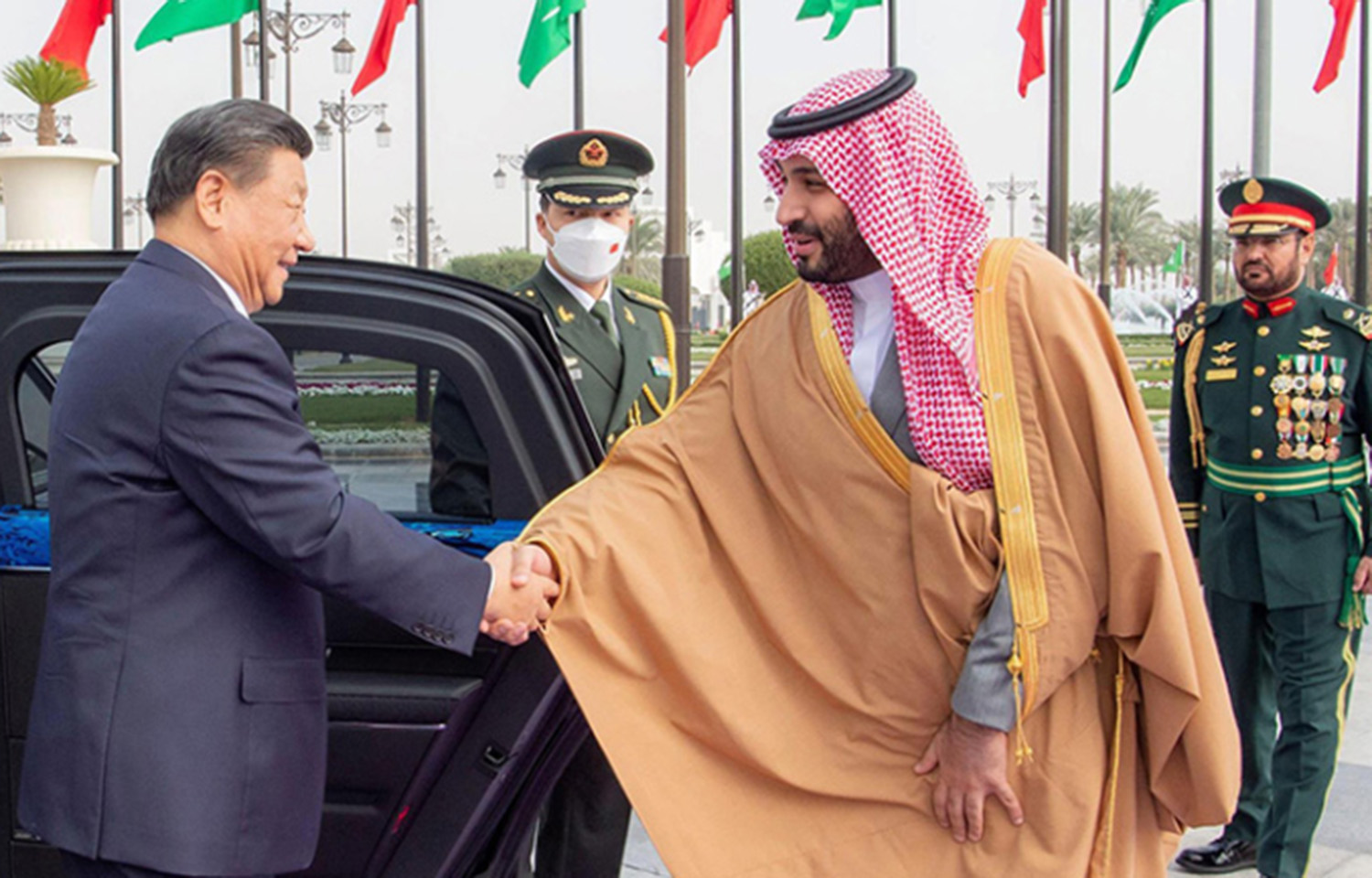
China is prioritizing a free trade agreement with the Gulf Cooperation Council in 2024, which would give Saudi Arabia low-duty access to the Chinese market for its exports of shrimp.
The Gulf Cooperation Council is a trade bloc consisting of Bahrain, Kuwait, Oman, Qatar, Saudi Arabia, and the United Arab Emirates. China has been negotiating a free trade deal with the GCC since 2005, but China has tightened its political bonds with the block, and specifically Saudi Arabia, in response to geopolitical and global economic shifts, resulting in cooperation on a number of seafood trading and industry development projects.
Beijing is also seeking to upgrade its free trade agreement with Peru this year, a top Chinese trade official announced at the National People’s Congress, which runs through March.
China is currently negotiating 10 free trade agreements and is conducting feasibility studies on eight more, China Vice Minister of Commerce Wang Shouwen said at a January press conference at the National People’s Congress, which runs through March.
Beijing is also seeking to upgrade its free trade agreement with Peru this year, and has advanced negotiations with Israel and Norway. According to the Chinese Commerce Ministry, China’s trade with countries with which it has negotiated free trade agreements now accounts for 40 percent of its total exports. However, trade to Hong Kong, Vietnam, and Malaysia, which all have free trade agreements with China, are also key transshipment points for exports to Western markets like the U.S.
Wang said trade growth and investment relations between China and its free trade partners is developing faster than that of its relations with countries with which it doesn’t have such arrangements, including the E.U. and U.S., which remain China’s biggest trade partners despite recent tensions.
Economists have calculated that China is seeking to ink more free trade agreements to be less reliant on World Trade Organization rules for access to export markets. Tensions between China over the U.S. have led to a slew of cases gumming up the WTO’s appellate body, a key dispute-resolution mechanism.
China is also benefitting from the Regional Comprehensive Economic Partnership, signed in 2020, which encompasses 14 other Asia-Pacific countries – including Japan, Korea, New Zealand, Australia, and the 10 Association of Southeast Asian Nations (ASEAN) member states. China’s trade with ASEAN has increased sixfold since their FTA came into effect in 2010, and the bloc is now China’s third largest trading partner, according to Wang.
Alicia Herrero, chief Asia economist at investment bank Natixis, said even China’s closest trading partners have concerns regarding Chinese overcapacity pushing down the price of exports in various Chinese industries.
“China’s overcapacity is a double-edged sword for the world,” Herrero said.
Price deflation in China has helped central banks globally to fight inflation, Herrero said, but China’s 20 percent share of global manufacturing production “makes it nearly impossible” for developing economies in Africa and Latin America “to compete in the production of nearly any industrial good.”
Those fears are resulting in a move toward economic protectionism, complicating China’s push for more free trade agreements, according to Herrero.
