



After a turbulent 2025 marked by oversupply and trade uncertainty, the global salmon sector has continued to struggle with lower prices at the start of 2026.
The year started with slightly elevated prices after a spike over New Year’s, and then throughout January, prices of fresh, Atlantic salmon from Norway steadily declined, increasing again in mid-February, likely due to Lunar New Year festivities in China, according to the SeafoodSource Pricing Portal, which aggregates data from the U.S., E.U., and Norway.
In Week 10, the Pricing Portal showed a slight increase in average global export prices for fresh, whole Norwegian farmed salmon, which were up to NOK 88.50 (USD 9.17, EUR 7.93) per kilogram compared to the Week 9 average global price of NOK 85.49 (USD 8.86, EUR 7.66) per kilogram.
However, prices have yet to fully rebound from those seen in 2025, which were shaped by unusually strong biological conditions in key farming regions such as Norway, Chile, and Scotland, leading to an excess of salmon production and, consequently, pushing prices down.
In addition to supply-driven price pressure, ongoing trade uncertainty around U.S. President Donald Trump’s tariff policy also added to price volatility in 2025.
Beginning on 7 August 2025, Norway, the largest source of seafood sent to the U.S., was subject to a 15 percent “reciprocal tariff.” Then, in January 2026, Trump threatened Norway with an additional 10 percent tariff, leading the Norwegian Seafood Council (NSC) to reconsider its marketing strategy in the U.S.
Following a U.S. Supreme Court decision on 20 February invalidating a large swath of Trump’s tariffs, Norway now faces a 10 percent global tariff.
In response to the ruling, NSC representative Martin Skaug told SeafoodSource in an email that “the Supreme Court decision doesn’t remove tariff risk for Norwegian seafood; it merely changes the framework and keeps the situation highly fluid."
As the year progresses, there are some tentative signs that supply may be tightening in Norway.
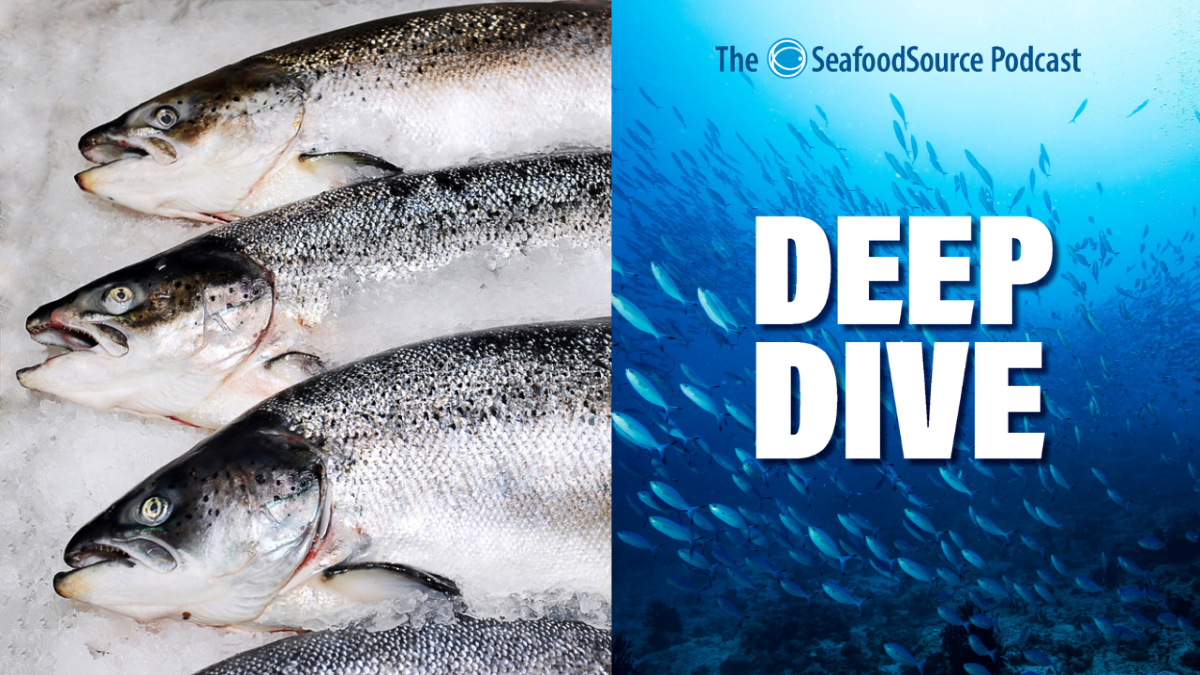
In the latest episode of Deep Dive: The SeafoodSource Podcast, SeafoodSource Price Reporting Specialist Erin Spampinato breaks down early salmon pricing trends and explores the key factors that could shape the market in 2026, including the war in Iran and the growing demand for Norwegian salmon in China.
