




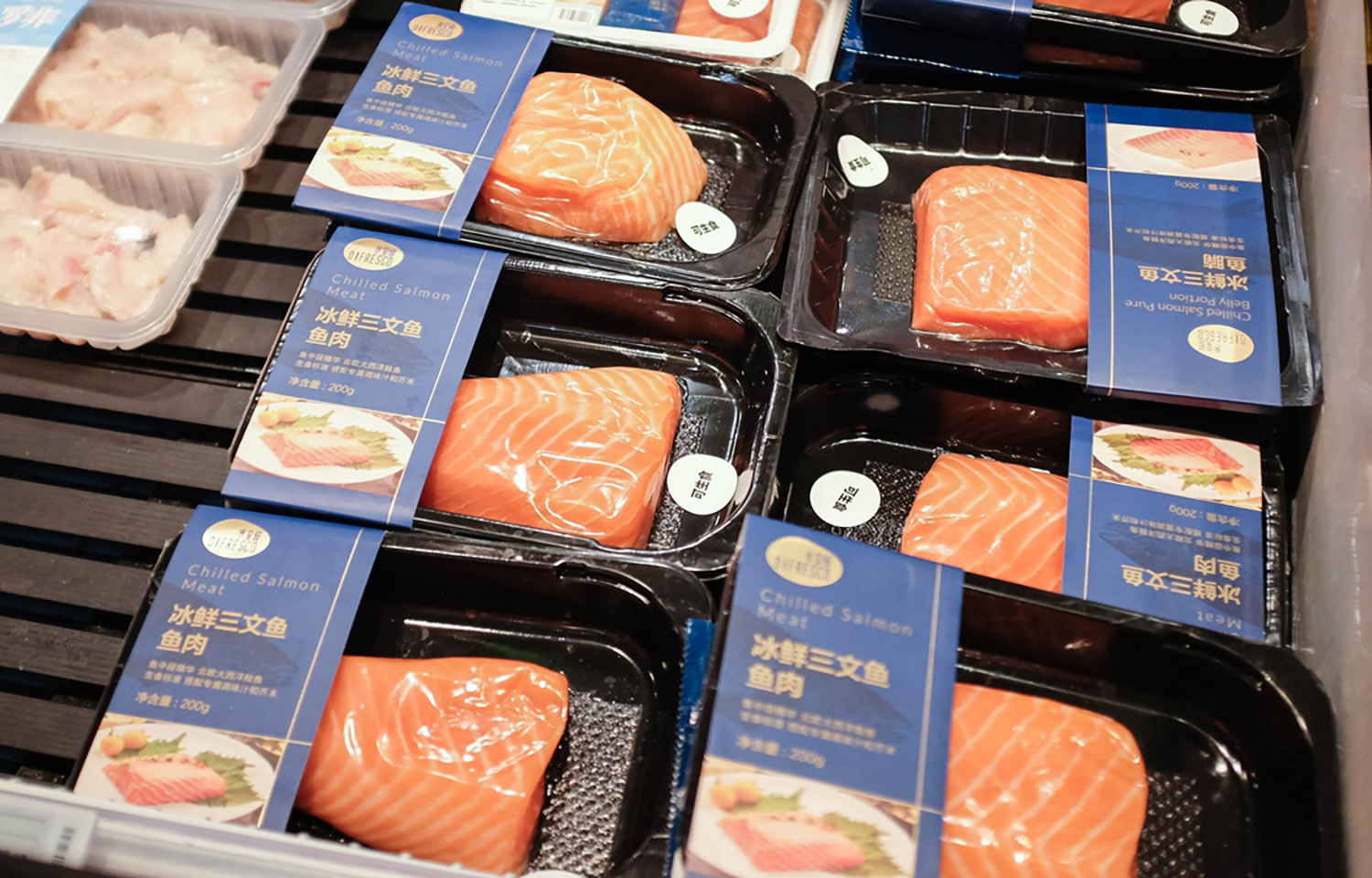
Norway’s salmon exports to China have jumped so far in 2025, but experts predict Norway’s market share will come under increased pressure as the year goes on.
So far in 2025, Norway has exported 6,937 metric tons (MT) of fresh whole salmon to China, a 56 percent increase in volume terms compared to the same period last year, according to data from the Norwegian Seafood Council.
“I suppose the growth driver is both underlying market growth and that Norwegian salmon has taken market shares,” NSC China Director Sigmund Bjorgo told SeafoodSource.
Prior to this growth, Bjorgo said Norway actually lost market share in 2023 due to biological challenges in the country, which resulted in smaller volumes of larger-sized salmon. Typically, the Chinese market prefers larger-sized fish, and lower supplies meant lower exports.
“The biology and supply situation in Norway is now much better," Bjorgo said. "As for the underlying market growth, Q4 2024 had almost 30 percent market growth. My hypothesis is that this growth has continued into the beginning of 2025, including the Chinese New Year.”
Chinese seafood prices rose 1.2 percent year over year in January, according to official data. While the average price of seafood grew faster than the overall consumer price index, which rose 0.5 percent, Fan Xubing, head of the Beijing-based Seabridge seafood marketing consultancy, said they are not optimistic of strong demand growth in 2025.
“Seafood consumption during Chinese New Year was still weak,” Fan said.
Fan said that while China's salmon imports have been “gradually growing” over the past decade and a half, strong salmon import growth in 2024 is “just a rebound” after several years of restraint during the pandemic.
Fan predicted Norway’s market share will come under continued pressure, and he also said farmed salmon is facing increased competition in China’s marketplace.
“More and more wild seafood imports with much cheaper prices have arrived in China during the last few years,” Fan said. “Sustainable fisheries policy has been executed in many countries for the past 20 to 30 years; [thus] more and more wild seafood fisheries have recovered in recent years. When the wild seafood is back, the farmed seafood needs to improve its quality, as well.”
