



Peru’s industrial fishing fleet has captured 1.6 million metric tons (MT) of the total allowable catch (TAC) established for the second anchovy-fishing season of 2025 in the nation’s North-Central zone, representing 98 percent of the 1.63-million-MT quota set for the season.
The Peruvian Production Ministry (PRODUCE) originally established a provisional 500,000-MT TAC for the season in the North-Central zone, which was a big drop from the 3-million-MT TAC that it established in the first season of 2025 and the 2.51-million-MT TAC it had in 2024.
However, PRODUCE’s technical arm, the Peruvian Institute of the Sea (Imarpe), issued updated scientific reports, confirming biological conditions that allowed for a higher quota than first anticipated. PRODUCE subsequently increased the TAC for the North-Central anchovy-fishing zone to 1.63 million MT.
The quota was considered by sector observers as somewhat lower than usual but still positive compared to previous years affected by El Niño weather patterns. In January 2024, PRODUCE closed the country’s second anchovy season early, following the complete cancellation of the first season of 2023.
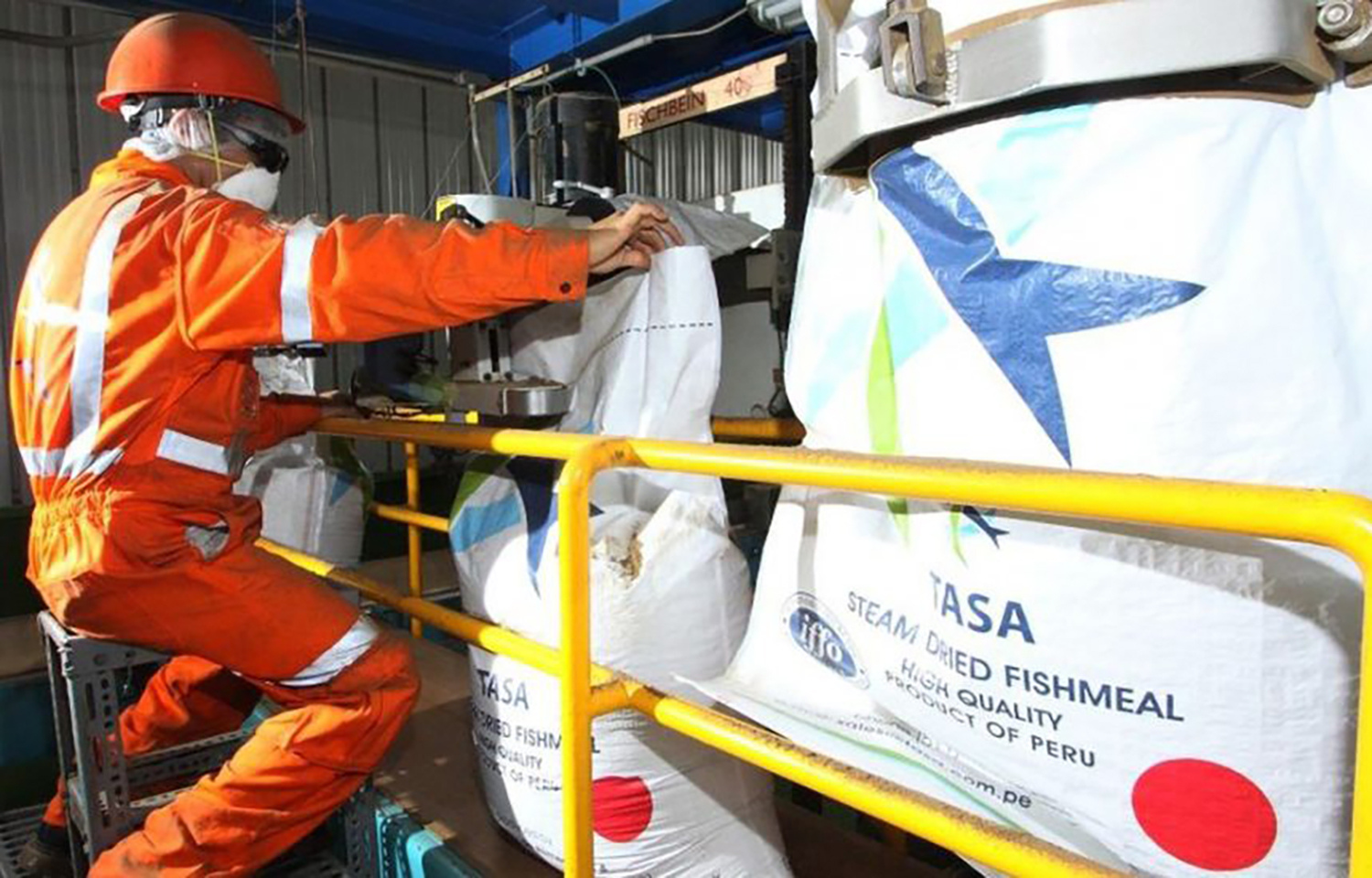
Catches from this most recent season, which began 7 November 2025, will result in the production and export of around USD 900 million (EUR 758 million) of fishmeal and fish oil, according to Peru’s National Fisheries Society (SNP). Peru’s anchovy fishery is the world’s largest commercial fishery by volume, and its highs and lows heavily influence global fishmeal and fish oil production and prices.
Broken down by port, Chicama in the northern La Libertad region led this season's catches, concentrating 30.7 percent of landings. In second place was Chimbote in the Ancash region, with 28.2 percent of the catch, followed by the terminal in Coishco, also in Ancash, with a 13 percent share.
Other landings were reported in Callao (7.5 percent of landings), Tambo de Mora (4.9 percent), Supe (4.2 percent), Vegueta (3.6 percent), Chancay (2.7 percent), Pisco (2.6 percent), Carquín (2.1 percent), and Bayóvar (0.5 percent).
Some 675 ships participated in this second fishing season of the year.
Peru divides its anchovy fishery into two regions – the North-Central zone, its main fishery, and the South zone.
PRODUCE opened the first anchovy-fishing season of the year for the South zone on 1 January. The season will run until 30 June or until the established TAC of 251,000 MT is reached, whichever comes first.
Looking forward, officials need to be vigilant in responding to possible abnormal conditions in 2026 that may cause variations in sea temperatures, SNP President Jessica Luna said.
“This projection of weak, warm conditions, which would coincide with the beginning of the first season [of 2026], will force authorities to make decisions according to what is coming [which will be] different since it’s not normal conditions. Not doing so and starting late would put this engine of economic growth at risk, as well as the incomes of the thousands of workers who operate in the industry. We’ve been warned,” she said.
