






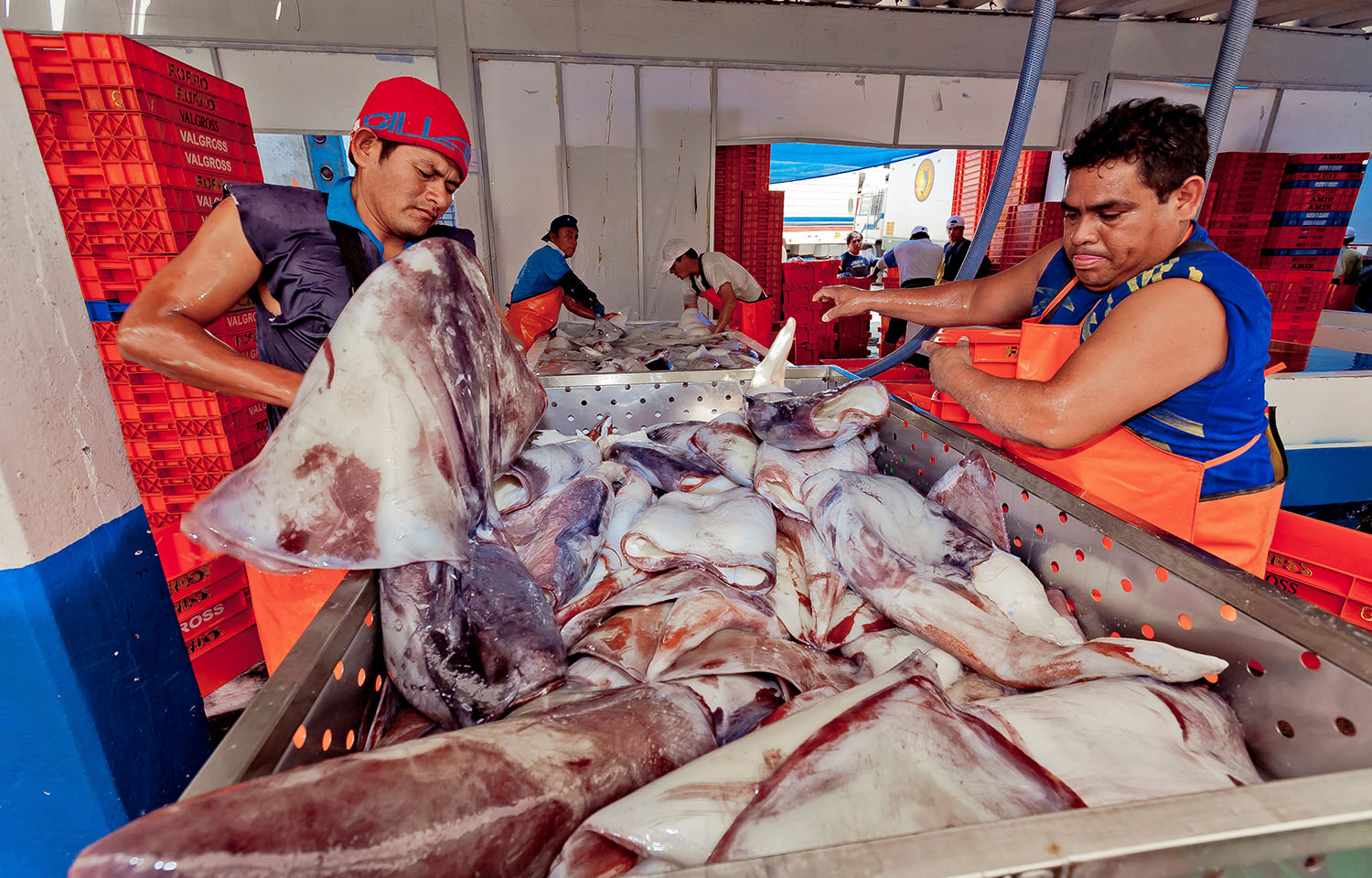
Peruvian artisanal fishermen have launched widespread protests in the northern coastal city of Paita and surrounding areas over a resolution from the Production Ministry (PRODUCE) limiting the capture of “pota,” or the jumbo squid (Dosidicus gigas) – the second most important fishery in the country.
Some 90,000 protesting artisanal fishermen have blocked the area’s main roads and highways since 30 September, lighting fires on roads and setting up boulders as obstacles. The turmoil has disrupted freight transport and local commerce – raising concerns in maritime and land transport sectors – while schools, local businesses, and hospitals were forced to close for security measures.
The fishers are expressing strong discontent over PRODUCE’s latest resolution setting a total allowable catch (TAC) of 40,000 metric tons (MT) for the jumbo squid extraction season, running from 1 to 17 October, in order to safeguard the period of greatest reproductive activity of the species. The resolution also sets maximum catch per fishing trip based on vessel capacity, with vessels less than 10 cubic meters allowed to catch 6 MT, vessels from 10 to 20 cubic meters allowed to catch 8 MT, and vessels greater than 20 cubic meters up to 32.6 cubic meters allowed to catch 12 MT.
The TAC comes after Peru’s giant squid fishery faced what authorities described as the worst crisis in the 25 years since the fishery began to exploit volumes of the species in Peruvian waters.
The protest’s leaders claim that the TAC is insufficient to guarantee minimum income and the subsistence of thousands of families in the region, where squid fishing sustains up to 70 percent of the local economy, including transport, trade, and related services.
They state that the government resolution lacks scientific support, asserting that PRODUCE’s technical arm, the Peruvian Sea Institute (Imarpe), has not carried out comprehensive studies on squid biomass, and that the measure leaves small fishermen unprotected, favoring large companies and foreign fleets - especially Chinese vessels, which operate just outside of Peru’s 200-mile exclusive economic zone (EEZ).
For its part, PRODUCE said the established TAC responds to technical and scientific criteria that seek to ensure the sustainability of the resource in order to protect fishing activity and the jobs it generates. To date in 2025, 521,000 MTs of squid have been extracted – nearly triple the total extracted in 2024, it said.
The ministry called for calm and expressed its willingness to hold open, high-level, and transparent dialogue with stakeholders.
“We understand the concern of fishermen, but we must remember that we are about to enter a closed period with scientific support, essential to guarantee the reproduction and future of this fishery. If we do not take care of the resource today, the income and jobs of the following year and of the next generations will be affected,” Deputy Minister of Fisheries and Aquaculture Jesús Barrientos said.
PRODUCE reinforced that it will continue dialogue with all actors in the production chain and support artisanal fishermen through responsible policies, always prioritizing the stewardship of the sea and hydrobiological resources “that are the heritage of all Peruvians.”
Peru’s National Society of Industries (SNI) expressed its strong condemnation of the acts of violence that have taken place in the city of Paita. It called for authorities to restore public order and establish spaces for technical and transparent dialogue.
“Violence cannot be a mechanism of pressure or an acceptable form of protest. Its normalization is a threat to the integrity of people, job stability, investment and the value chains that sustain thousands of formal jobs and provide food to Peruvian families,” SNI said in a release.
