





The government of the Philippines has filed a diplomatic protest over the “escalatory actions” of Chinese government vessels and aircraft in the South China Sea, accusing the nation of violating international law.
“The Philippines remains resolute in asserting and protecting its sovereignty, sovereign rights, and jurisdiction in the [West Philippine Sea] and urges China to observe Philippine laws and comply with its obligations under international law, particularly [the United Nations Convention on the Law of the Sea],” the National Marine Council of the Philippines said in a 13 January statement. “China should direct its vessels to desist from conducting illegal actions that violate the Philippines’ sovereign rights in its [exclusive economic zone].”
China’s government has dismissed the Philippine’s accusations, claiming its activities were peaceful and legal.
"China urges the Philippine side to cease its malicious hype," Chinese Foreign Ministry spokesperson Guo Jiakun said, according to Reuters.
Tensions between China and the Philippines have spiked several times in the last year over the two nations’ competing claims to exclusive fishing rights in areas of the South China Sea.
While the Philippines has continued to send its fishers into those areas and provide them supplies and protection, China has increased coast guard and militia patrols in the region to deter them.
In May 2024, a blockade of Chinese coast guard and militia vessels attempted to block Filipino fishers from reaching the Scarborough Shoal. There have also been multiple reports of collisions, with the Filipino government accusing Chinese vessels of using dangerous maneuvers and water cannons to harass Filipino fishers and supply ships.
The most recent incidents involved two Chinese coast guard vessels operating in areas that the Philippines claims are its own. The National Maritime Council also claimed one of its own coast guard vessels was harassed by a Chinese military helicopter.
“The escalatory actions of these Chinese vessels and aircraft clearly disregard Philippine and international laws, as their actions are inconsistent with the exercise of freedom of navigation and innocent passage as well as the exercise of rights and observance of duties by other states in the Philippines’ EEZ,” the National Maritime Council said in its statement on the incidents. “China does not have any basis to conduct law enforcement activities or maritime patrols over these waters. The Philippine government further reaffirms its commitment to continue and intensify its legitimate maritime law enforcement and patrol operations, and to safeguard and provide humanitarian support to Filipino fisherfolk in the WPS."
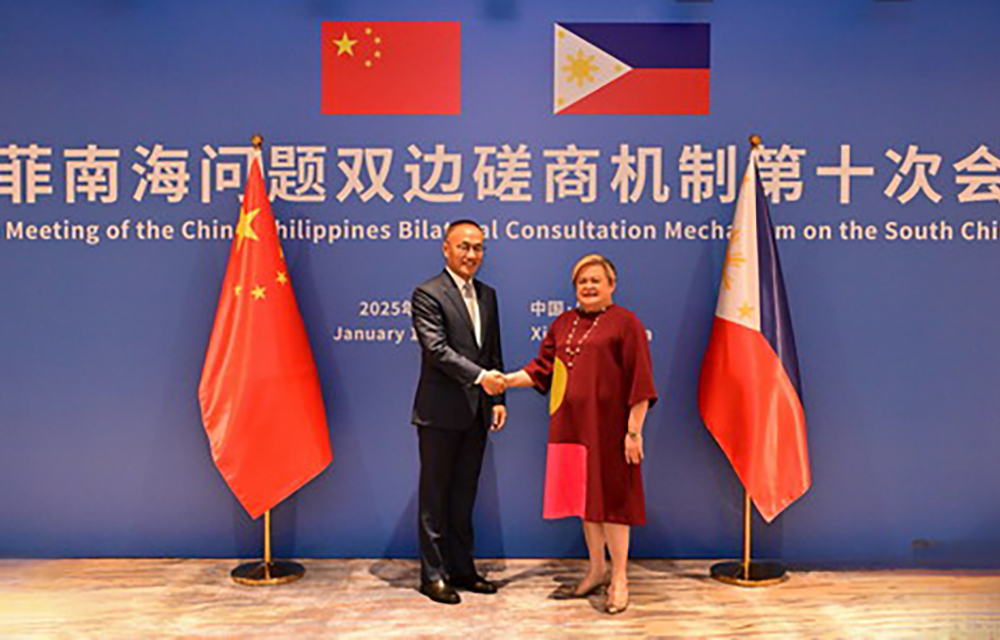
Chinese and Filipino diplomats met 16 January to discuss the situation, where China lodged its own protests against “the Philippines' recent maritime infringement and provocative activities as well as its peddling of the maritime disputes between China and the Philippines,” according to China’s Ministry of Foreign Affairs.
Still, both sides expressed a commitment to continued dialogue on the conflict.
“Our position is clear and consistent but so is our willingness to engage in dialogue. We firmly believe that despite the unresolved challenges and differences, there is genuine space for diplomatic and pragmatic cooperation in dealing with our issues in the South China Sea,” Philippine Foreign Affairs Undersecretary Theresa P. Lazaro said in a statement.
In January, both outgoing U.S. President Joe Biden and Vice President Kamala Harris held phone calls with Philippines President Ferdinand Marcos, Jr. According to the White House’s official readouts of those calls, Biden discussed “China’s dangerous and unlawful behavior in the South China Sea,” and Harris “affirmed the importance of continued defense of international rules and norms in the South China Sea in the face of provocations from the People’s Republic of China and noted the United States must stand with the Philippines in the face of such provocations.”
