






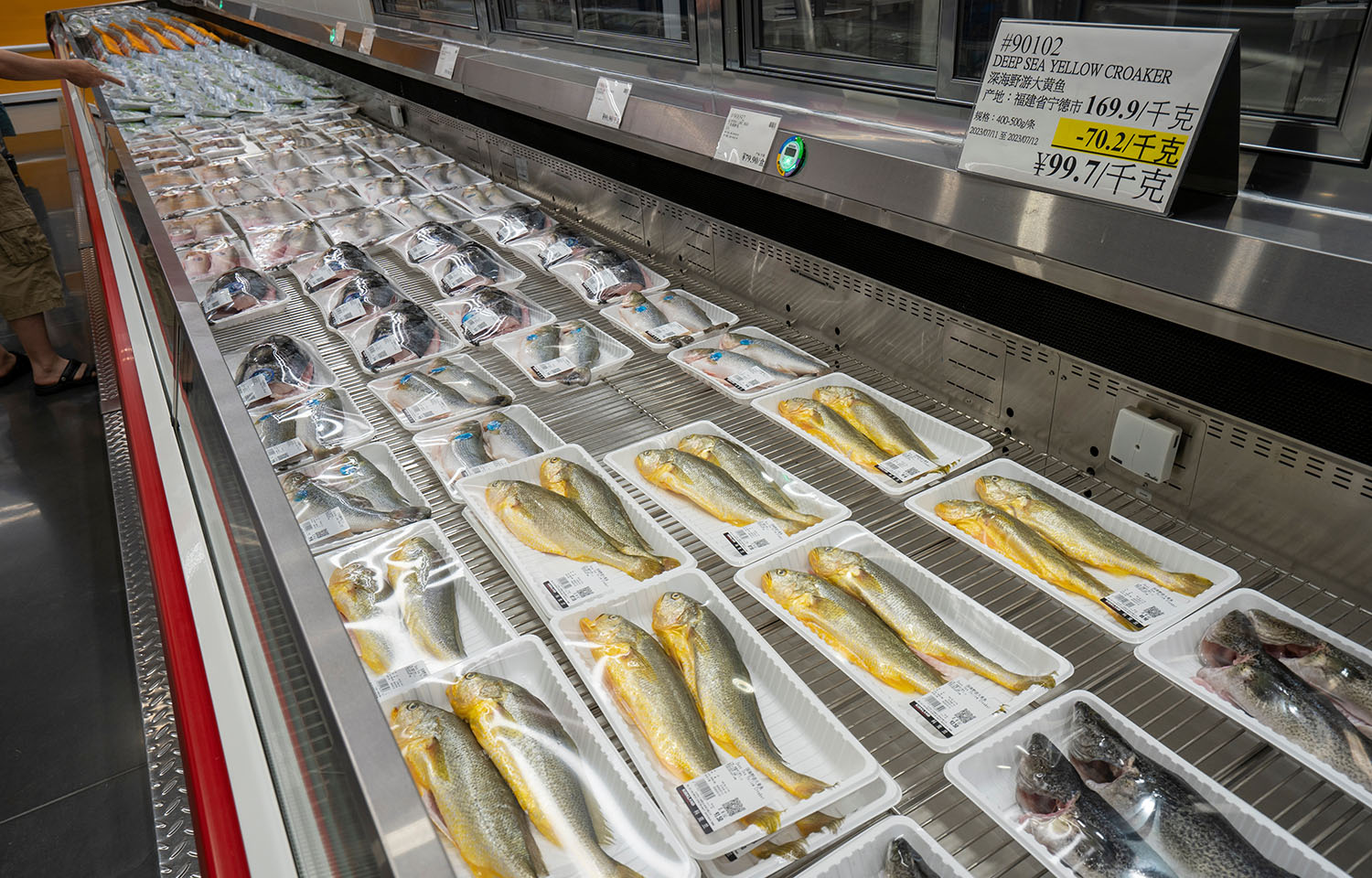
The price of premium proteins, including seafood species such as croaker and salmon, have fallen in recent weeks in China.
Data collected from wholesale markets across China, reported by the China Agriculture Ministry, show weak price growth for key seafood species in line with a broader deterioration in protein prices.
The price for large yellow croaker in the first week of June at CNY 40.90 (USD 5.60, EUR 5.20) per kilo is down 3.2 percent on the same time last year, according to the data collected by China’s Agriculture Ministry from wholesale markets nationwide.
Pressure on premium species appears to also impact salmon. The wholesale price of fresh Norwegian salmon on JD.com, a China-based online shop, hit a 175-day low on 17 June, and average salmon prices fell 20 percent in the 10 days leading into 30 May, according to the Global Times. It blamed salmon prices in China on weaker global demand for the fish, as well as weaker consumer demand inside China.
The price movements appear to be part of a broader trend for higher-priced proteins. Average beef prices at wholesale markets across China were down 16.5 percent and sheep meat prices down 10.2 percent in the first week of June compared to the same period in 2023. Prices for chicken and pork – traditionally less costly meats – suggest stronger demand. Chicken prices were down 1.4 percent year over year in the first week of June, and pork prices climbed 15.3 percent in the same time frame.
In contrast, China continued to see stronger demand for cheaper seafood species. The average price of crucian carp at CNY 20.40 (USD 2.85, EUR 2.65) was up 11 percent year over year. Average prices for silver carp were up 6.6 percent in early June compared to last year’s prices.
China’s economy has wobbled as it has emerged from the Covid-19 pandemic to an inflationary global economic environment. The country’s 2024 GDP grew 5.3 percent year over year in Q1 2024, slightly better than expected. Yet, its manufacturing and infrastructure sectors continue to drive growth while consumption has been tepid.
“The economic structure is significantly unbalanced, with the supply side much stronger than the demand side,” a recently published research note from the China offices of Spanish bank BBVA said.
