




According to new research from Dutch banking and financial services firm Rabobank, escalating trade disputes and geopolitical tensions are battering the global seafood industry, and the long-established supply chains for shrimp, salmon, tilapia, pangasius, and groundfish are facing unprecedented disruption.
The Rabobank report, “Caught in the Current: Geopolitics Threaten the Global Seafood Industry,” advises that some seafood markets may eventually stabilize, but the uncertainty surrounding global trade policy is already deterring investment and undermining long-term planning.
The report’s author, Rabobank Senior Global Specialist for Seafood Gorjan Nikolik, told SeafoodSource the industry is navigating “a perfect storm” of trade barriers, geopolitical risk, and supply chain fragility, all of which are making the diversification of strategic sourcing and market access essential.
However, such supply chain shifts are likely to be costly and difficult in a price-sensitive industry, according to the report, which pointed out that while some choice producers may benefit from redirected trade flows, most are grappling with rising costs, shrinking markets, and unstable demand.
Nikolik added that even if tensions ease, he doubts there will be a return to “normal” trade patterns.
“Even if trade restrictions are reduced and all the deals are made, few seafood industry players will be comfortable with either sourcing or market concentration of 50 percent to 90 percent to one region again, as we so often see currently,” he said. “Diversification will be a key aspect of risk mitigation.”
Nikolik said whether a market has the potential to absorb the effects of disrupted supply chains depend on the sector in question. In the case of shrimp, for instance, Europe will receive more supply in the short term and looks like the best market at the moment. Long term, however, Asia will have to absorb more Asian supply, according to Nikolik.
“India, Indonesia, and other Southeast Asian markets have a lot of potential but need to be developed far more,” he said. “In the case of tilapia, there are options in Asia, especially domestically in China, but also in Latin America, such as Mexico and Africa.”
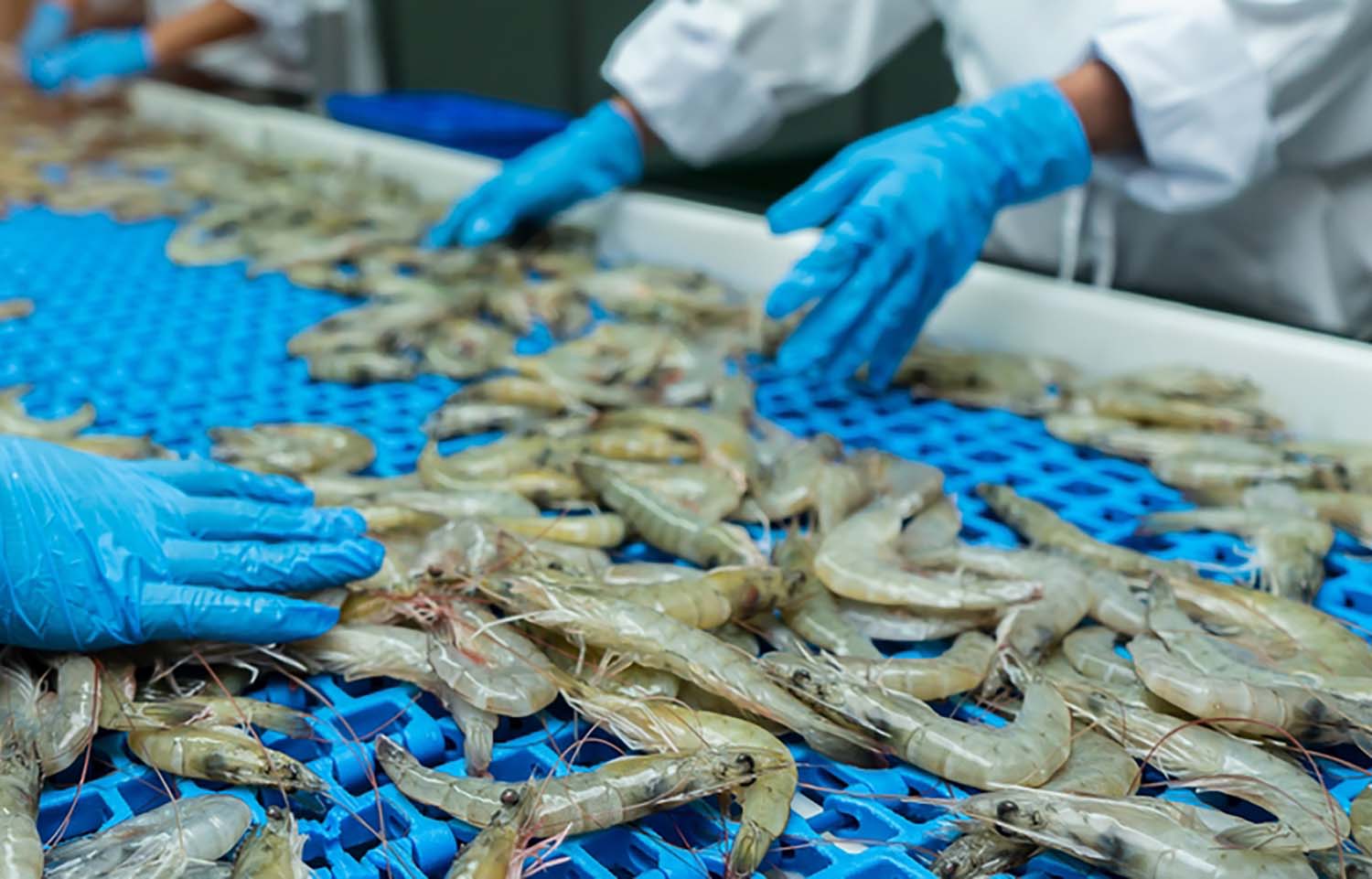
Shrimp, the world’s most traded seafood category, is bearing the heaviest brunt of U.S. tariffs, the report said, with Asian exporters facing duties of up to 50 percent.
This, it said, has forced exporters to redirect supplies to China and Europe, creating oversupply and price volatility. Meanwhile, Ecuador, which has been less affected by U.S. trade measures, may gain ground in the U.S. market.
Nevertheless, the report suggests a decline in U.S. shrimp consumption appears inevitable due to the improbability of passing on tariffs of 40 percent or more to consumers.
Salmon producers are also vulnerable, with Canada – which sends nearly 90 percent of its salmon exports across the border to the U.S. – facing the threat of new tariffs. Amid the uncertainty, investment has stalled, according to the report, and steep tariffs could push U.S. prices higher and undermine Canadian producers.
In the freshwater fish sector, Chinese tilapia has effectively been priced out of the U.S. market, which it has traditionally relied upon. As such, American consumption is expected to fall sharply.
Rabobank expects Chinese producers to redirect supply to domestic consumers or to alternative markets such as sub-Saharan Africa and Mexico, but notes these regions already have established local industries and, without protective tariffs, may be vulnerable to a flood of low-cost imports.
Vietnamese pangasius exporters, which have been hit with a 20 percent U.S. tariff, are also struggling to maintain competitiveness, the report said.
Simultaneously, groundfish markets have been shaken by sanctions on Russian seafood and inflation due to lowered quotas on cod, especially in markets like the U.K. U.S. bans on Russian pollock have led to a glut of surimi in Asia, crushing prices and squeezing producers across the region.
With trade being used as a “geopolitical weapon” it is hard to predict what factors could restore investor confidence in disrupted sectors, Nikolik said.
“Clearly, a different U.S. administration with a different stance on global trade will help,” he said. “The next few years could show the resilience of the industry considering some of the most abrupt trade policy changes we have seen in decades. This could also be helpful, but the risk of trade restrictions is now a new normal.”
