






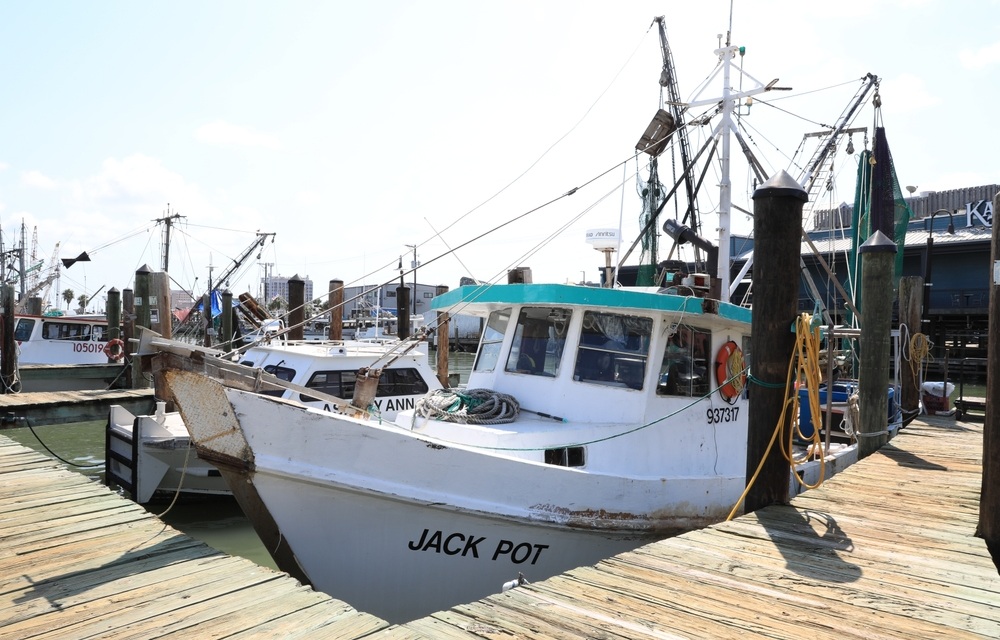
More restaurants in Galveston, Texas, U.S.A., are serving domestic wild-caught shrimp than they were a year ago, according to testing from SeaD Consulting.
The firm – which has been conducting DNA testing of shrimp sold and served along the U.S. Gulf Coast to highlight the prevalence of imported shrimp – claims that holding restaurants accountable has helped deter mislabeling and incentivized them to utilize Gulf-caught shrimp on their menus. When the company conducted testing in December 2024, only 41 percent of Galveston restaurants tested were serving domestic shrimp. Follow-up testing conducted in December 2025 showed a notable improvement, with 64 percent of restaurants tested serving domestic shrimp.
“This year-over-year improvement proves that verification works,” SeaD Consulting Founder David Williams said in a statement. “When restaurants are tested and held accountable, many correct course quickly. But, the fact that five restaurants misrepresented shrimp origin in both testing periods tells us this isn’t confusion; it’s a pattern. Continued oversight is essential to protect consumers and honest businesses.”
The sample sizes between the two periods were noticeably different, however.
The first round of testing sampled 44 restaurants, while the second round of testing randomly sampled just 22 of the previously tested restaurants. The 2024 tests showed 18 restaurants serving Gulf-caught shrimp, while the 2025 test showed 14 restaurants serving Gulf-caught shrimp. SeaD Consulting noted that two restaurants that had been caught mislabeling shrimp previously had since switched to serving Gulf shrimp.
Still, SeaD Consulting noted that the testing showed five restaurants continuing to misleadingly serve imported shrimp, “indicating persistent, structural fraud.”
“Domestic shrimpers cannot compete against deception,” Southern Shrimp Alliance Deputy Director Blake Price said in a statement. “What’s encouraging is that when fraud is exposed, some restaurants do the right thing. What’s unacceptable is that a core group continues to mislabel, knowing the harm it causes to fishermen and coastal economies.”
In addition, one restaurant sampled switched from domestic shrimp to imported shrimp between testing periods, which SeaD Consulting said represented inconsistent sourcing.
A contributing factor to the possible increase in domestic shrimp being served in Galveston is a new law passed by the Texas legislature last year. SB 823 requires seafood wholesalers, distributors, and suppliers to clearly label imported shrimp. It also bans restaurants from labeling or marking imported shrimp products as “Texas shrimp,” “Gulf shrimp,” “American shrimp,” or “Domestic shrimp.”
“During the past legislative session, the Texas Legislature took an important step forward by passing SB 823 to crack down on shrimp mislabeling and protect both consumers and our coastal economy,” Texas Representative Terri Leo Wilson said in a statement. “Laws alone do not solve the problem, but the progress we are now seeing, including more domestic Gulf shrimp being served in local restaurants, shows that accountability is working. We will continue building on this momentum to support Texas shrimpers, honest businesses, and families who deserve to know exactly what they are being served.”
