


The National Shrimp Festival, taking place in Gulf Shores, Alabama, U.S.A., will now require all shrimp being sold at the four-day event to be tested to ensure they are local, wild-caught shellfish after random sampling at last year’s event found foreign shrimp being sold by multiple vendors.
“It’s important for everyone – distributors, processors, restaurants, and festivals – to ensure they are serving the wild-caught local shrimp they claim to offer,” Henry Barnes, the mayor of Bayou La Batre, Alabama, said in a release. “Our community depends on it. When a festival like this leads with authenticity, it sets a standard for everyone else to follow.”
SeaD Consulting renewed conversation around the prevalence of imported shrimp along the U.S. Gulf Coast last year, when it began conducting rapid DNA testing of restaurants and vendors in Southern cities and festivals.
That testing revealed high levels of foreign shrimp SeaD Consulting claimed was being misleadingly presented as domestic products. Random sampling of five vendors at the National Shrimp Festival in October 2024 found that four were serving imported shrimp. While the festival did have a rule imposing a fine on vendors serving imported shrimp, testing was effectively nonexistent prior to SeaD Consulting’s efforts.
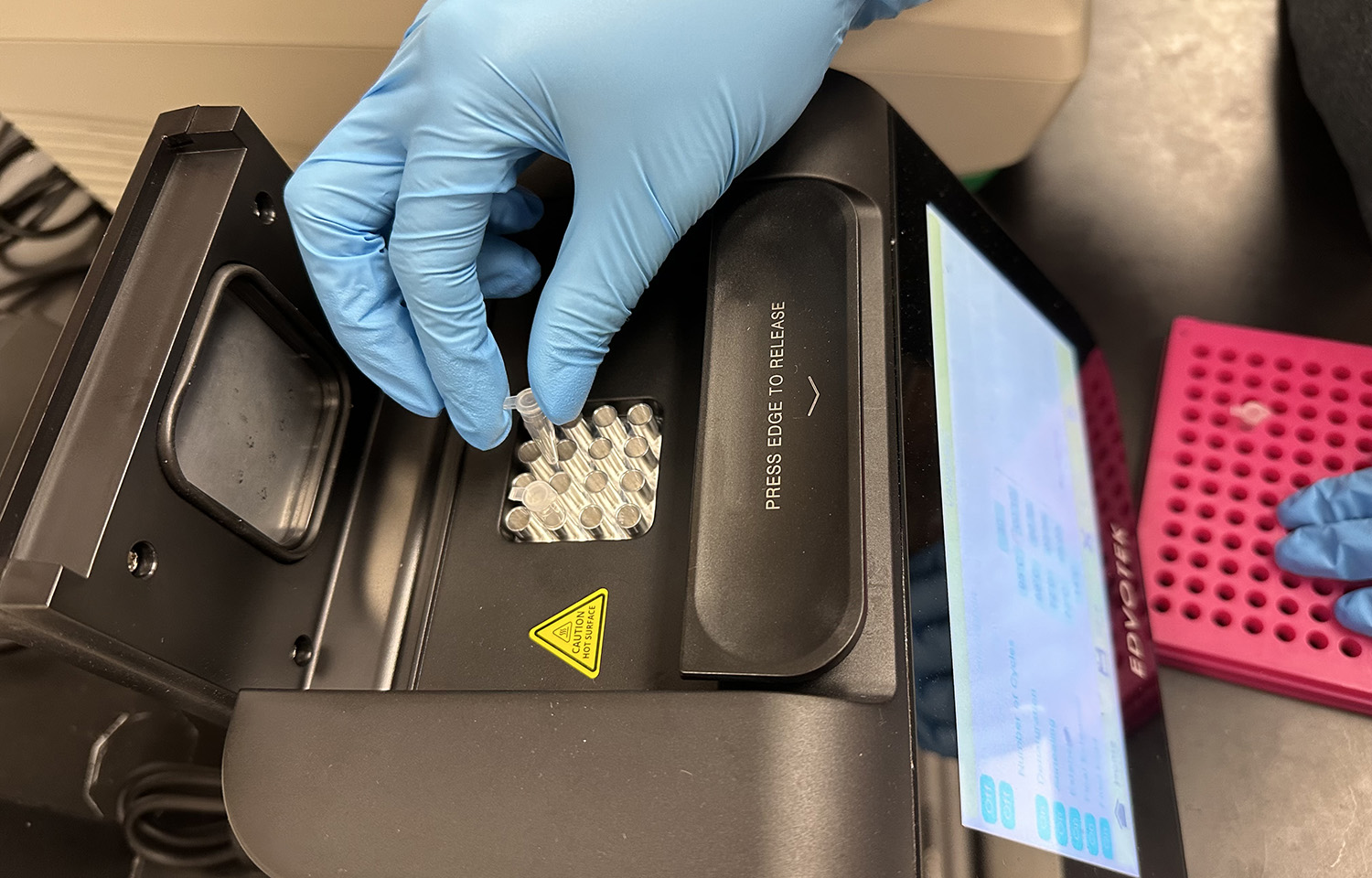
Now, the festival has partnered with SeaD Consulting to conduct testing of all vendors serving shrimp at the event. SeaD Consulting’s Rapid ID Genetic High-Accuracy Test (RIGHTTest) provides same-day results, allowing event organizers to quickly respond if vendors are found to be serving foreign shrimp. The festival has also designated a volunteer “Chief Shrimp Investigator” to assist the testing process.
The partnership is sponsored by the Organized Seafood Association of Alabama (OSAA), which has provided financial support for the testing.
“Without this kind of support, our shrimping industry is dying before our eyes,” OSAA President Ernie Anderson said in a social media post. “We are losing generational infrastructure, families who have kept this industry alive for nearly a century. Just this fall, the Bryant family’s processing company in Bayou La Batre, Alabama, is closing after almost 100 years in business. If we don’t hold the line, there won’t be any commercial fishermen left to celebrate.”
The annual festival is taking place 9 to 12 October.
SeaD Consulting also conducted testing at the Louisiana Shrimp & Petroleum Festival in September. In 2024, the company’s tests, like in Alabama, revealed that four out of five sampled vendors were serving imported shrimp. The revelation similarly drew outrage from the community, which expected the shrimp festival to be promoting local – or at least domestic – shellfish.
“Growing up in St. Mary Parish in a family of generations of commercial shrimpers, I was appalled to learn of the widespread selling of imported shrimp at the Louisiana Shrimp & Petroleum Festival,” Louisiana State Representative Jessica Domangue (R-Houmawrote) said in an open letter to event organizers following the revelations.
The testing and outrage led the festival to introduce new requirements that food vendors can only serve local, wild-caught shrimp.
This year, SeaD Consulting tested seven vendors at random, all of which were confirmed to be serving local shrimp. The company took credit for multiple festivals introducing new requirements banning foreign shrimp from their events. The testing also provided the impetus for several new seafood-labeling requirements introduced at the state level last year.
“Consumers deserve honesty, and shrimping communities deserve fairness,” SeaD Consulting CEO Dave Williams said in a release. “Thanks to the leadership of festivals like the Shrimp & Petroleum Festival, Jazz Fest, and the Louisiana Shrimp Festival in New Orleans, as well as the support of our funders, we’re seeing real change that helps both diners and the men and women who make their living on the water.”
