






U.S. President Donald Trump announced in a post on his Truth Social social media platform that he has agreed to delay 25 percent tariffs on Mexican goods for another month.
The move comes just two days after the Trump administration implemented 25 percent tariffs on Mexico and Canada, along with an additional 10 percent tariff on China on 4 March. Those tariffs were themselves implemented after a one-month delay from the original order in early February.
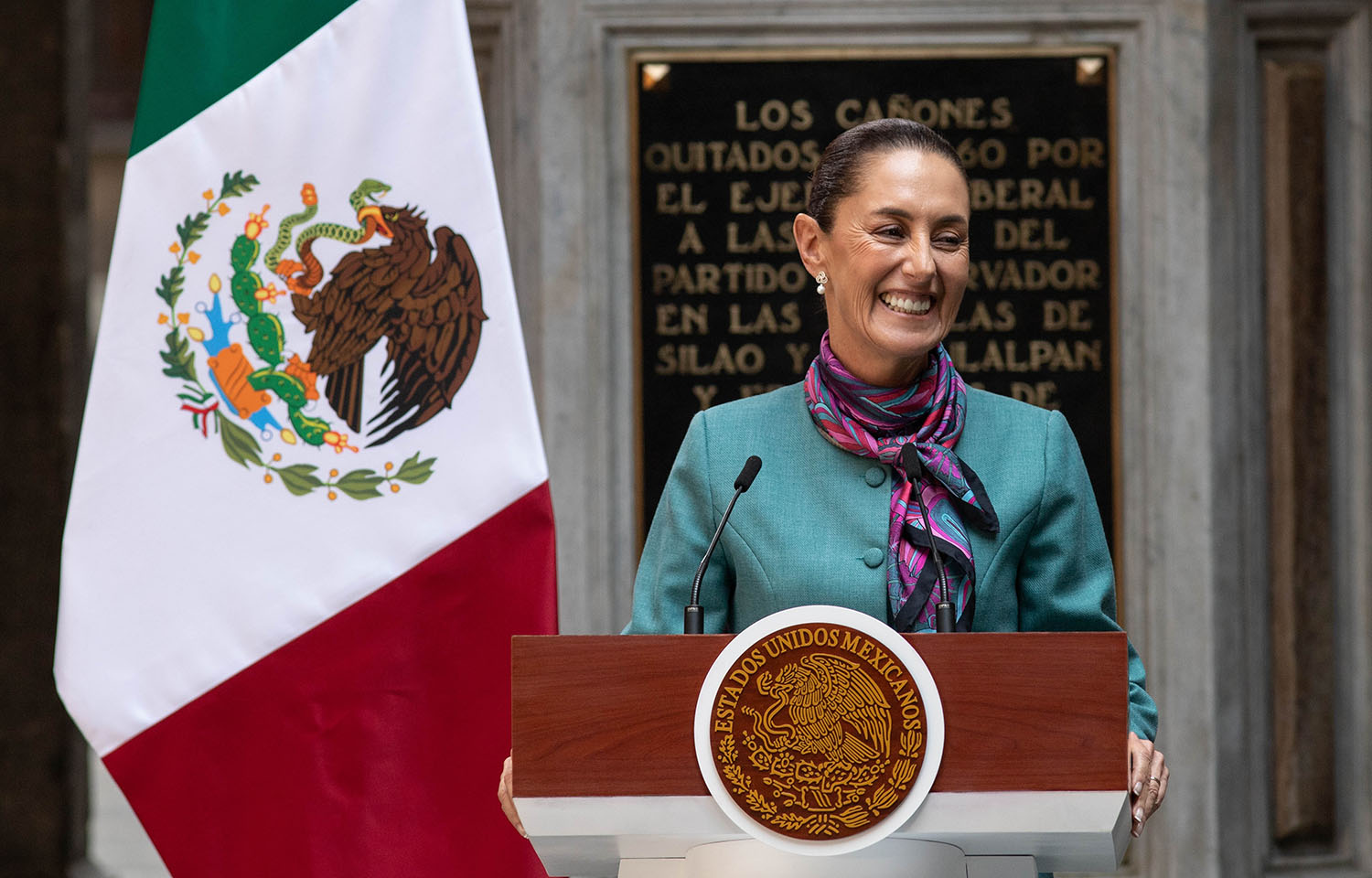
Trump said he suspended the tariffs after a conversation with Mexican President Claudia Sheinbaum.
“After speaking with President Claudia Sheinbaum of Mexico, I have agreed that Mexico will not be required to pay tariffs on anything that falls under the USMCA Agreement,” Trump wrote. “This agreement is until 2 April. I did this as an accommodation and out of respect for President Sheinbaum.”
That move would cover a huge swath of products from Mexico covered by the USMCA agreement – which Trump negotiated to replace the existing North American Free Trade Agreement in 2018.
On 4 March, Sheinbaum said Mexico planned to retaliate to Trump’s tariffs and announced an address to the country on 9 March that would cover the topic. She has not given any further update on Mexico’s plans.
While Trump paused tariffs on Mexico, he did not mention any change in his stance on Canada. Commerce Secretary Howard Lutnick in an interview with CNBC on 6 March that it was likely that there would be another one-month delay on all Canadian tariffs but also said negotiations are ongoing.
“This month, my expectation is the president will come to the agreement today and hopefully will announce this today that USMCA-compliant goods will not have a tariff for the next month until April 2,” Lutnick said.
Trump repeatedly targeted Canadian Prime Minister Justin Trudeau in commenting on the tariffs on his Truth Social page, claiming that Trudeau is “using the tariff problem” to run again for prime minister.
“He was unable to tell me when the Canadian election is taking place, which made me curious, like, what’s going on here?” Trump wrote. “I then realized he is trying to use this issue to stay in power.”
Trudeau announced his plans to resign from the role of prime minister in early January, effective as soon as his Liberal Party names a successor.
Currently, the CBC reports there are four main contenders for the position: Mark Carney, Chrystia Freeland, Karina Gould, and Frank Baylis. Once named – which could occur as early as Sunday, 9 March – the party leader will inherit a minority government, and then it will be up to the official opposition to force an election when Canadian Parliament resumes. CBC reports the opposition will likely force an election as soon as that happens.
Under Canada’s government system, the exact date of an election is not a pre-determined event, and currently, Trudeau is not a viable candidate for prime minister.
Trudeau told the media on 6 March that even if Trump paused tariffs for another month, Canada’s retaliatory tariffs on CAD 30 billion (USD 20.1 billion, EUR 19.4 billion) in U.S. goods will remain in place until the tariffs are fully removed.
“It’s promising, but I would highlight that it means the tariffs are still in place,” he said. “Therefore, our response will remain in place.”
Those tariffs only narrowly cover seafood items, but a future CAD 125 billion (USD 86 billion, EUR 81 billion) in tariffs listed a wide swath of seafood items including lobster, crab, flatfish, salmon, and tuna.
