






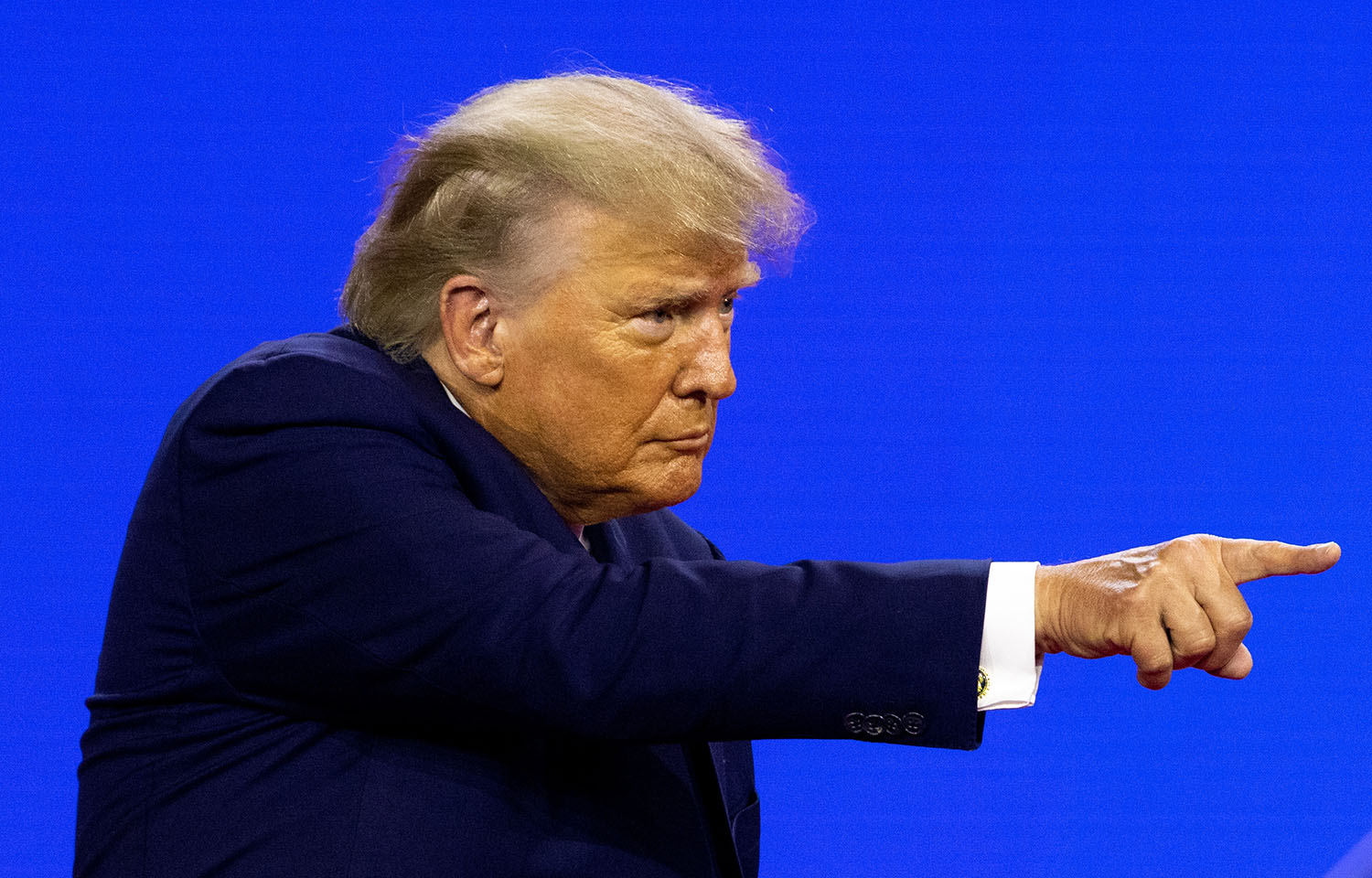
U.S. President Donald Trump followed through on his proposal to tariff goods from Canada, Mexico, and China on 1 February, kicking off a potential trade war.
Trump is imposing blanket tariffs of 25 percent on all Canadian and Mexican goods – aside from a carveout of a lower 10 percent tariff on Canadian energy – and an additional 10 percent tariff on goods from China, defying economist predictions that the tariffs would not be wide-sweeping.
In a post to Trump’s social media platform Truth Social, the president said the tariffs were enacted through the International Emergency Economic Power Act (IEEPA) “because of the major threat of illegal aliens and deadly drugs killing our Citizens, including fentanyl.”
The tariffs against Canada come through the executive order titled “Imposing Duties to Address the Flow of Illicit Drugs Across our Northern Border,” claiming the “flow of illicit drugs like fentanyl to the United States” was sufficient grounds to impose the across-the-board tariffs. The order also contains a provision allowing Trump to expand the scope of the tariffs against Canada should it "retaliate against the United States in response to this action."
A fact sheet posted by the White House said that until “the extraordinary threat posed by illegal aliens and drugs” is alleviated, the tariffs will continue. In an interview on 31 January, President Trump told media neither Canada nor Mexico could prevent the tariffs, the CBC reported.
Figures from U.S. Customs and Border Protection indicate it seized 19.5 kilograms of fentanyl total at the northern border and 9,570 kilograms at the southern border in 2024.
All told, the tariffs will hit roughly USD 1.4 trillion (EUR 1.35 trillion) of imported goods a year, CNN reported.
Soon after announcing the 25 percent tariffs, the leaders of both Canada and Mexico responded in kind.
Canada Prime Minister Justin Trudeau hit back with tariffs on USD 155 billion (EUR 149 billion) of U.S. goods, CBC reported. The tariffs will initially hit USD 30 billion (EUR 28 billion) of American goods starting Tuesday and then apply them to another USD 125 billion (EUR 120 billion) in U.S. goods in three weeks.
“Tonight, first, I want to speak directly to Americans, our closest friends and neighbors,” Trudeau said during his announcement. “This is a choice that, yes, will harm Canadians, but beyond that, it will have real consequences for you, the American people. As I have consistently said, tariffs again against Canada will put your jobs at risk, potentially shutting down American auto assembly plants and other manufacturing facilities, they will raise costs for you, including food at the grocery stores and gas at the pump.”
Trudeau said the country already launched a USD 1.3 billion (EUR 1.2 billion) border plan to secure it against illegal drug trafficking and that the country didn’t want to impose tariffs but that it “will not back down in standing up for Canadians.”
Several Canadian premiers also strongly condemned Trump’s tariffs and called it an economic attack on Canadians and the country’s sovereignty.
"It's a moment where we need to stand strong and united in such an assault," Newfoundland and Labrador Premier Andrew Furey told CBC News.
British Columbia Premier David Eby announced his own set of countermeasures and directed the B.C. Liquor Distribution Branch to immediately stop purchasing liquor from U.S. states led by Republicans – the same political party as Donald Trump – CBC reported.
Mexican President Claudia Sheinbaum also ordered retaliatory tariffs against the U.S. In a post on X, Sheinbaum harshly rebuked Trump’s assertion that the Mexican government had alliances with criminal organizations.
“If such an alliance exists anywhere, it is in the armories of the United States that sell high-powered weapons to these criminal groups, as was demonstrated by the United States Department of Justice itself in January of this year,” she wrote.
Sheinbaum did not specify which goods that the country would target with tariffs.
China, meanwhile, said that it opposes the tariffs but has not yet announced any direct retaliation. China’s Ministry of Commerce announced it would file a legal case with the World Trade Organization, the New York Times reported, and that it would take countermeasures to “firmly safeguard its rights and interests.”
The last trade war that Trump engaged in with China cost U.S. seafood exporters USD 350 million (EUR 337 million) in 2018 alone, with some industries being hit harder than others. The Maine lobster industry was hit with an 84 percent drop in its exports to China in 2019. Prior to the tariffs, the lobster industry was on track to have a record-setting year in 2018 terms of lobster export value to China with USD 87 million (EUR 84 million) worth of exports through June of that year.
The impact of the new trade conflict on the seafood industry will likely be complicated. The U.S. imported USD 6.5 billion (EUR 6.3 billion) worth of seafood from Canada, Mexico, and China in 2023.
Certain industries will likely be hit harder than others.
The Canadian snow crab and lobster industries both send large volumes of product worth millions to the U.S. The U.S. imported USD 434 million (EUR 413 million) in frozen lobster, USD 337 million (EUR 321 million) in live lobster, and USD 271 million (EUR 259 million) in cooked frozen lobster meat – totaling USD 1.04 billion (EUR 991 million) for the lobster industry alone.
Some of the lobster subject to tariffs could actually be lobster originally caught in the U.S., too.
During the 2025 Global Seafood Market Conference, Slade Gorton & Company Director of Marketing and Business Development Annie Tselikis said roughly 60 percent of lobster caught in Maine gets shipped to Canada for processing. Champlain Seafood Vice President of Sales Owen Kenney added that that product is frequently shipped back into the U.S. as meats and tails. That product that is shipped back would be subject to Trump’s new tariffs.
Therefore, if Canada’s tariffs similarly hit Maine lobster, the industry would be hit by tariffs twice – both going into Canada and coming back into the U.S.
Canada’s industry has already been shifting shipments toward China in the wake of the U.S. trade war, Kenney said. Trade data indicates Canada’s lobster exports increased from 11 million pounds in 2013 to 76 million pounds in 2023.
The tariffs on China could similarly have an impact on the wider seafood industry. The last time the two countries entered a trade war, China listed 170 seafood items from the U.S. as subject to tariffs.
The USTR extended exclusions on certain tariffs on seafood products from China that came from the last trade war, many of which are U.S. products sent to the country for reprocessing. It is still unclear whether those goods will now be subject to a tariff.
