
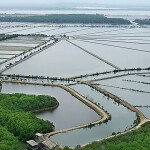

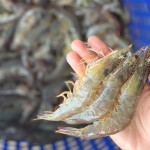

Ecuador’s shrimp industry is facing increasing cost pressures following an uptick in electricity tariffs for large industrial consumers.
Combined with the impact of rising fuel costs and more expensive fishmeal, fish oil, and other agricultural inputs used in shrimp feed, the continuity of businesses across the sector is at risk, Ecuador’s National Aquaculture Chamber (CNA) warned.
Under a revised tariff structure introduced by Ecuador’s Electricity Regulation and Control Agency (Arconel), large industrial, high-voltage consumers will see electricity prices rise from an average of USD 0.12 (EUR 0.11) per kilowatt-hour to as much as USD 0.35 (EUR 0.31), depending on their tariff category and consumption schedule.
The new rates took effect 1 October and are scheduled to remain in place through the end of 2026.
“The issue is not only lower margins: What’s at stake is the ability to continue operating and sustain jobs,” CNA said, warning that producers competing in international markets cannot automatically pass every additional cost on to buyers and, therefore, Ecuadorian shrimp farmers now face a competitive disadvantage against producers in countries such as India, where energy is cheaper.
The chamber also highlighted differences in electricity costs between companies operating in the same industry, depending on their tariff category, questioning the decision to place additional costs on high-voltage consumers that have invested in their own electrical infrastructure, including substations.
The impact extends beyond shrimp farms directly affected by the tariff increases.
Higher electricity costs for suppliers and service providers may also be passed on to shrimp production, including the cost of balanced feed, processing, and refrigeration, placing pressure on the competitiveness of the entire supply chain.
The tariff changes come as the nation’s government has expanded mandatory electricity disconnections for energy-intensive industries as part of its efforts to reduce demand and prevent blackouts for the public.
The government has said the mandatory disconnections form part of its technical electricity demand management plan, intended to reduce consumption and avoid blackouts for the public. Ecuadorian broadcaster Ecuavisa reported that the Environment and Energy Ministry (MAE) has insisted mandatory disconnections were imposed only after some industrial companies failed to meet previously agreed-upon consumption-reduction targets.
For Ecuador’s shrimp producers, however, restrictions on power availability create a difficult operating environment for a sector that depends on uninterrupted energy supply throughout the production cycle.
Shrimp production depends on a continuous electricity supply as farms and laboratories work with living organisms; interruptions can threaten the survival of larvae and shrimp in cultivation, while feed production and processing operations also depend on reliable power.
Further, maintaining the cold chain is particularly important for processing plants and logistics operations handling shrimp destined for export. A prolonged disconnection can cause losses that cannot be recovered once electricity returns, CNA warned.
CNA Executive President José Antonio Camposano particularly criticized the government's announcement that electricity disconnections would be extended to three days per week, less than a week after 48-hour cuts had been announced.
“The situation is critical for sectors like the shrimp industry; we work with living organisms, and a continuous power supply is essential for their survival and for maintaining the entire production and cold chain,” he said in a social media post on X. “There is an urgent need for transparency regarding the scale of the energy crisis and for the adoption of broader, concrete measures coordinated with the private sector. We cannot continue to delay decisions or place the burden of the crisis on specific productive sectors.”
Meanwhile, the CNA noted that while interruptions continue, the government must ensure sufficient and timely diesel supplies to support companies’ own power generation.
The chamber is calling for a coordinated response that addresses both electricity prices and the reliability of supply, urging the government to provide clear information on the country's energy situation and present a plan with specific measures and deadlines to allow companies to plan operations and investments.
It has also called for faster permitting procedures so private companies can contribute additional electricity generation capacity.
Additionally, CNA said authorities should clearly communicate the criteria and conditions for a tariff review slated for December. It called for authorities to plan power supply restrictions around the operational requirements and actual backup-generation capacity of the different parts of the shrimp supply chain.
Ecuador’s shrimp sector has taken steps to try to find solutions to the nation’s energy shortages in the past. Earlier this year, CNA signed a memorandum of understanding (MoU) with the MAE to bolster the supply of electricity to the nation’s shrimp sector.
At that time, less than 10 percent of the nation’s shrimp sector operated with electricity, with the remaining 90 percent still depending mainly on diesel for the operation of pumping and aeration systems. Under the MoU, the industry and the state set the foundations to accelerate the transition toward a more efficient, sustainable, and competitive energy matrix.
The CNA and the Sustainable Shrimp Partnership (SSP) also established the Energy Working Group in September of last year, which Camposano characterized as a proactive initiative by Ecuador's shrimp-farming sector to identify regulatory, procedural, and legal bottlenecks while engaging the private sector to develop alternative solutions that could help ease pressure on an already overburdened electrical system that has been underfunded for decades.
