



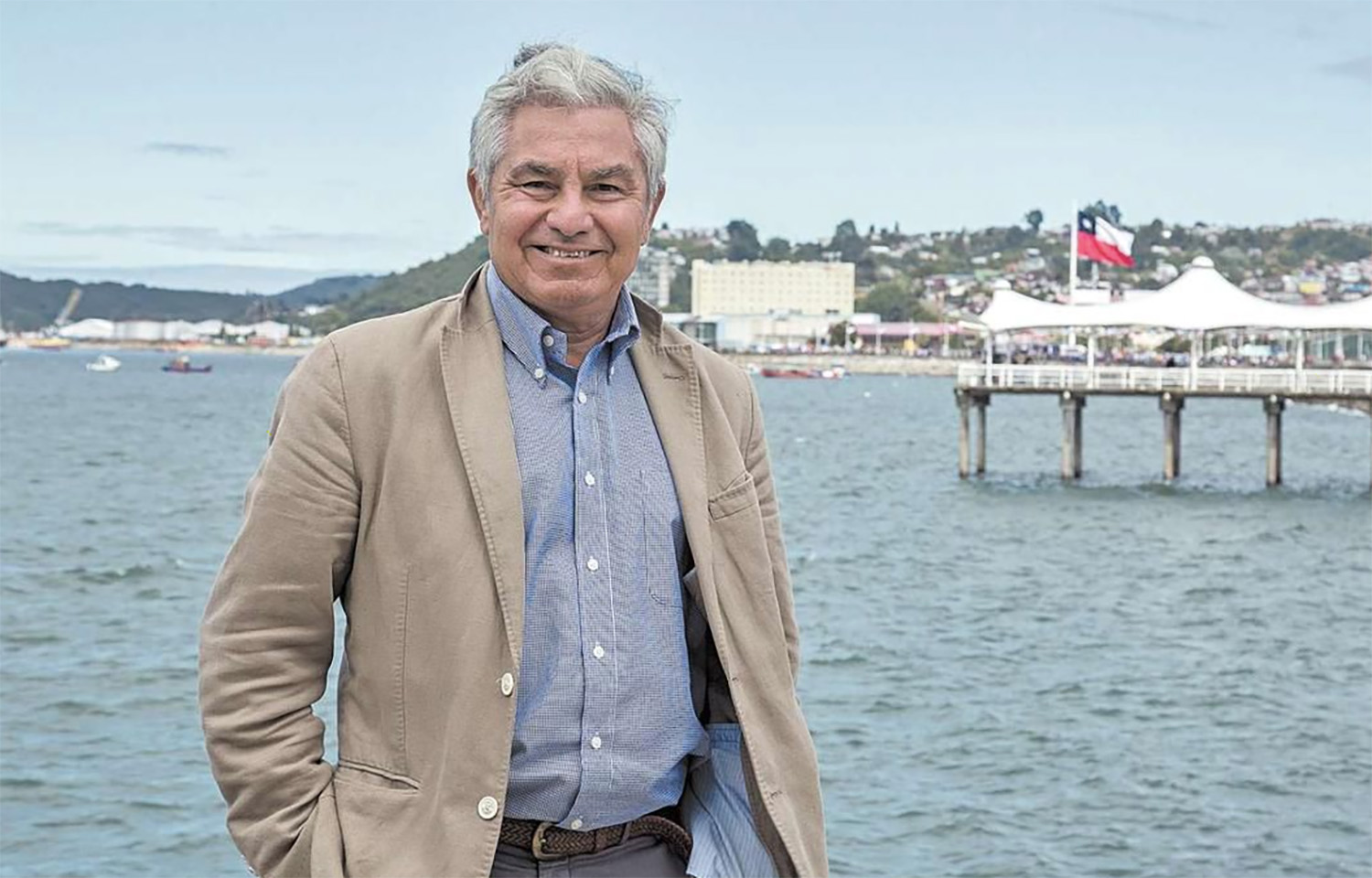
Arturo Clément recently stepped down as president of Chilean salmon industry association SalmonChile after having led the association since 2018.
Looking back on his time at the helm of the organization, the transformation of the industry and its relationship with communities located in Southern Chile has been one of the areas that makes Clément most proud.
“When I took office, salmon farming faced significant challenges in its relationship with communities and in its public image. We then decided to shift and focus on the territories. We went from being a defensive sector to being protagonists of the national debate,” he said. “I am especially proud to have contributed to changing the conversation about salmon farming. The south ceased to be just a place on the map to become a territory of thought and future.”
Under that strategy, SalmonChile implemented programs that sought to strengthen the bond with surrounding communities, such as the “Dialogues for the Salmon Farming of the Future,” which involved eight meetings in different locations in Southern Chile, at which more than 800 people from 44 towns participated, representing 287 local organizations.
SalmonChile also produced two versions of the Salmon Summit, a local event with a national scope in which the sector engaged with leaders such as former President Eduardo Frei and Chile’s presidential candidates in 2025 – an achievement Clément said “would have been unthinkable a few years ago” – as well as renowned economists, scientists, directors of environmental organizations, and union leaders.
SalmonChile further supported events such as “Congress of the Future” to help disseminate information regarding aquaculture science and innovation and has participated as an exhibitor at international investment meetings during Chile Day in London, U.K.
Clément also reminisced on difficulties faced during the Covid-19 pandemic. In response, SalmonChile coordinated the "Committed to the South" campaign, bringing together more than 70 companies in the sector to create a solidarity fund of CLP 1.8 billion (USD 2 million, EUR 1.7 million).
“We donated thousands of personal protection items, delivered ICU beds and monitors to hospitals such as Quellón, and brought food to vulnerable families,” Clément said.
He added that he has few misgivings regarding his time leading the association.
“I don't regret specific decisions, but perhaps we should have been more aggressive at times to defend the sector against unfair or uninformed criticism,” he said.
As the industry progresses, Clément said there are some areas that need to be further developed, such as salmon-farming concessions being able to relocate – a process which Clément said has been “paralyzed” for 14 years despite ample data the association provided to Chilean Congress to advance the cause.
“I also would have liked to consolidate a national agreement on salmon-farming development that would transcend political cycles,” he said. “We have made progress, but we still need to have a state vision of the role of salmon farming in the development of the country.”
Another sore subject Clément highlighted is Chile’s lack of a specific law governing the sector. Currently, aquaculture activity in Chile is regulated under the nation’s general fishing law, but due to the size of the Chilean aquaculture industry – the country’s salmon sector exported over USD 6.5 billion (EUR 5.6 billion) in 2025 alone – and its significant differences with the fishing sector, many industry stakeholders have said aquaculture merits separate regulation.
The Chilean government launched a public participation process in late 2023 to discuss establishing a new law and held several events to engage stakeholders with the aim of submitting a bill to Congress in 2025; however, this came to a standstill last year.
Clément said the sector needs governance that combines three essential elements: sustainability, legal certainty, and decentralization.
“Sustainability is non-negotiable. Our activity is compatible with environmental stewardship, and there is a real commitment from companies to advance and consolidate a sustainable operation. But, this must be accompanied by legal certainty. Investors, from small suppliers to large companies, need to know what the rules of the game are to project themselves over time,” he said. “Decentralization is fundamental. Decisions on salmon farming must be made with greater participation of the territories. The ‘Dialogues for the Salmon Farming of the Future’ that we held left us with a clear lesson: Communities want to be part of the decisions that affect their territory.”
To that end, Clément pointed to the 50-year Salmon Plan promoted by the municipality of Puerto Montt as a good example of quality grassroots public policy, with the participation of local authorities, workers, academia, and companies.
Generally, Clément remains optimistic of the future for Chilean salmon farming.
“Chile has everything to be the world's leading aquaculture power. We just need the decision [to do it] and a long-term view. For 2026, we hope to continue positioning salmon farming as a key sector for the economic reactivation and development of southern territories,” he said, expressing confidence that the administration of new President José Antonio Kast will view salmon farming as a strategic lever for Chile’s development.
Clément stepped down at the end of February, with the association’s board of directors electing longtime politician Patricio Melero as his replacement. Clément celebrated that appointment.
“His extraordinary career as a parliamentarian for seven consecutive terms, and as labor minister, give him experience and knowledge that will be invaluable to the sector,” Clément said. “Patricio knows the workings of the state like few others and has the capacity to continue positioning salmon farming as a key player in Chile's development. I am convinced that his leadership will be a tremendous contribution for the sector to strengthen and continue contributing to the growth of the south.”
In the meantime, Clément will continue to remain engaged with the sector and the association.
“I will continue to be a passionate defender of Chilean salmon farming. Because I am convinced that, when the south [of the country] grows, Chile [as a whole] grows,” he said.
On a personal level, Clément said he is looking forward to dedicating more time to his family.
“These years have been very intense, with many trips and commitments. It's time to make up for some of that time,” he said.
