



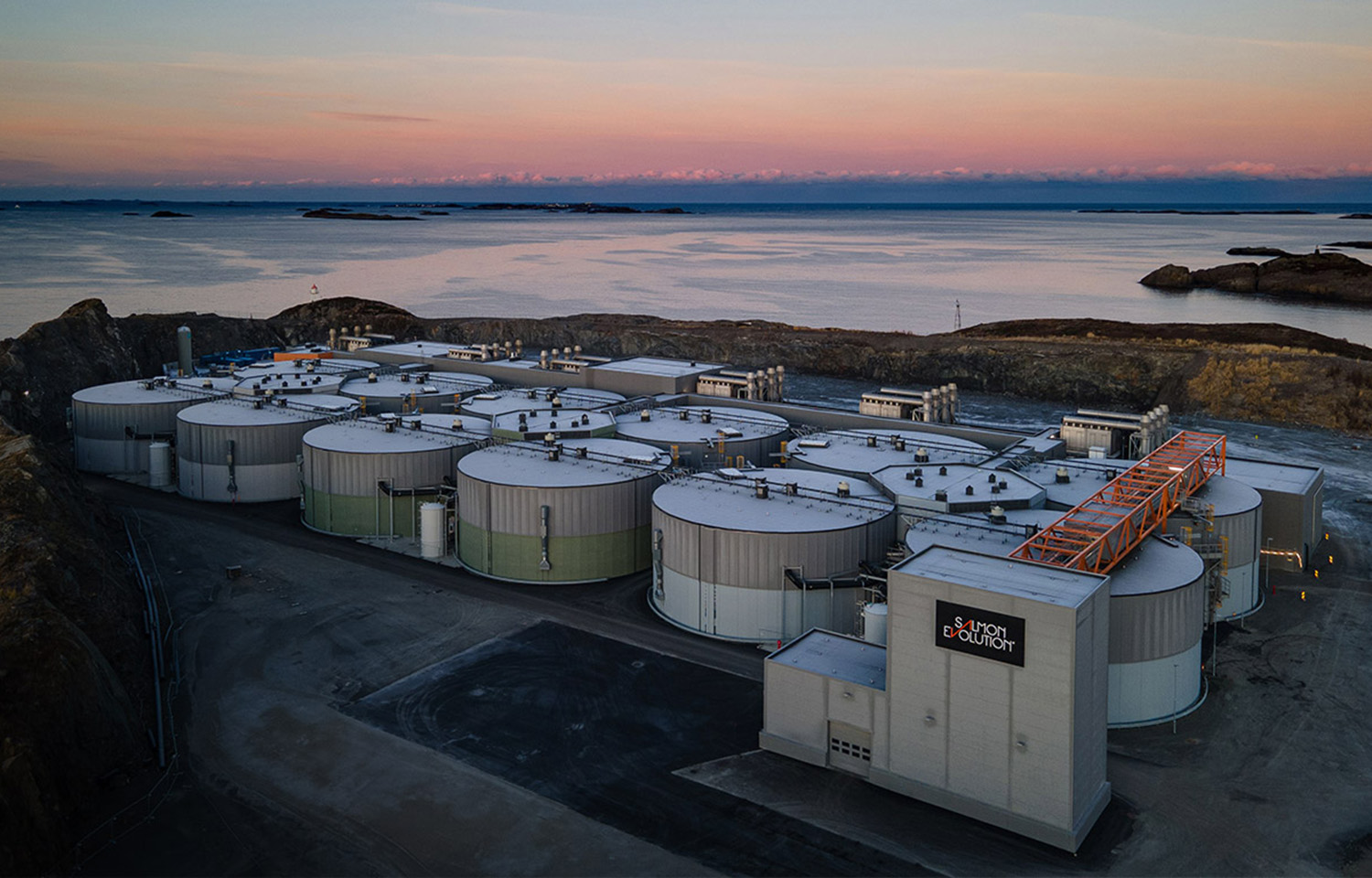
Land-based salmon farmer Salmon Evolution has signed a contract with Cflow to deliver fish-handling technology to Phase 2 of its build-out process for its land-based salmon farm outside Ålesund, Norway.
According to a release from Cflow, the company will provide fish-handling equipment including piping, valves, and pumps at the company’s facility at Langevåg outside Ålesund.
Salmon Evolution CEO Trond Håkon Schaug-Pettersen said in Q2 2024 it completed its financing package to start work on Phase 2. Salmon Evolution said design and engineering work on the phase has already commenced, and equipment deliveries will take place in early 2025 and continue into 2026.
“Salmon Evolution’s second phase build-out represents the next exciting chapter in Cflow’s land-based future,” Cflow Chief Marketing Officer Gunnar Hoff said.
Cflow did not disclose the total value of the contract but said it “is strategically important for the company.”
The second phase of Salmon Evolution’s land-based, flow-through salmon aquaculture facility will increase its production capacity by 10,100 metric tons (MT) of head-on, gutted salmon – bringing the company’s total production volume to 18,000 MT.
“We have worked hard to prepare fish welfare for land-based aquaculture. Salmon Evolution can already demonstrate highly impressive biological results, but our joint ambition is to further improve both animal welfare and their commercial results,” Hoff said. “We have turned every stone and employed our best biologists and engineers to develop a very gentle fish handling system.”
Salmon Evolution recently posted a Q3 2024 operational update, indicating it harvested 680 MT of HOG salmon with 98 percent of the harvest reaching superior grade, and it achieved an average price of NOK 72 (USD 6.58, EUR 6.08) per kilgoram.
The company said it expects to harvest 2,500 MT of salmon in the second half of 2024, bringing its full-year harvest volume to 5,000 MT.
"Biomass production is steadily improving, with a wide range of initiatives ongoing to take out the full growth potential,” Schaug-Pettersen said.
The company said as of the end of Q3, it had a standing biomass of 2,582 MT live weight.
"The standing biomass is close to record levels going into Q4, which together with a further increase in expected harvest weights, makes us well-positioned to capitalize on the expected price rebound,” Schaug-Pettersen said.
