






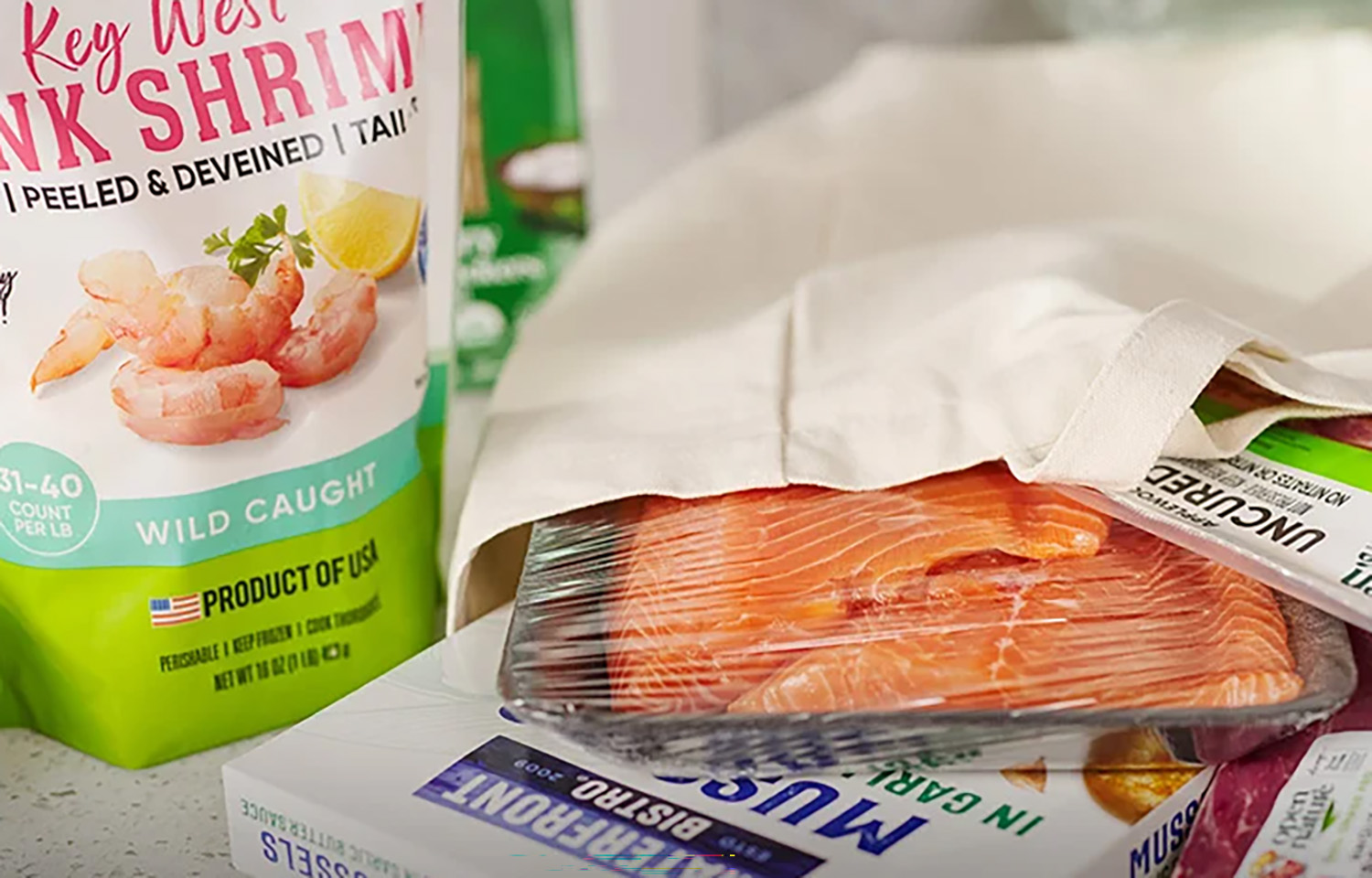
Sales of frozen and fresh seafood declined at U.S. retail stores in August, continuing a tough summer for the categories.
Declines in seafood prices have occurred all summer at retail, which led to sales gains in some niche categories in June and July, but prices in fresh and frozen rose slightly in August, leading to a corresponding dip in sales, according to 210 Analytics Principal Anne-Marie Roerink in a recent U.S. Retail Seafood Performance Review report.
Frozen seafood sales dropped 4.2 percent by value to USD 739 million (EUR 664 million) and declined 2.6 percent by volume, according to Circana Integrated Fresh data analyzed by 210 Analytics. Fresh seafood sales decreased 2.2 percent by value to USD 807 million (EUR 725 million), while sales by volume dropped 4.9 percent.
Refrigerated seafood items typically compete with the meat department for consumer dollars, and meat had a very strong month in August, Roerink told SeafoodSource, as overall sales by volume in the category rose 2.6 percent compared to August 2023. Beef sales by volume rose 4.3 percent, and pounds of chicken sold rose 2.8 percent.
“While seafood prices are looking better for the consumer than they did last year, the average price per pound of USD 9.60 [EUR 8.60] remained significantly higher than the average price per pound for the three biggest animal proteins,” Roerink said.
Shelf-stable seafood sales performed a bit better during the month, rising slightly by 0.2 percent year over year to USD 330 million (EUR 297 million), while sales by volume shot up 8.3 percent.
The U.S. Bureau of Labor Statistics’ August Consumer Price Index (CPI) found that fish and seafood prices at retail dropped 2.3 percent in August compared to August 2023, while prices rose only 0.2 percent month over month.
Overall food inflation rose 2.1 percent in August, according to the CPI, with restaurant prices contributing to the majority of the incline. Food-away-from-home costs soared 4 percent in August, while food-at-home expenses rose only 0.9 percent.
Restaurant traffic has fallen as those menu prices have risen, Roerink noted during the recent Seafood in the U.S. Retail Q2 2024 webinar. In the first quarter of 2024, restaurant traffic declined 2 percent, according to Circana/CREST.
Though seafood has struggled at retail, seafood dishes at restaurants typically suffer from high markups, so supermarkets stand to gain significant sales by promoting seafood meals to-go in their deli departments, Roerink said.
“The meal landscape remains very home-centric. Whether we look at lunch or dinner, the vast majority of meals are prepared at home,” Roerink said.
Around 41 percent of consumers want to try to recreate restaurant meals at home – particularly older generations, according to Roerink.
"We see a lot of focus on ready-to-cook and ready-to-eat seafood,” she said. “[Sushi is growing] bigger than ever … we continue to see more stores adding sushi to their distribution,” Roerink said, noting that more stores are also adding poke bowls.
Despite the tough August, another positive sign for U.S. retail seafood sales is consumer sentiment. The University of Michigan's preliminary reading on the overall index of consumer sentiment has reached 69 in mid-September – the highest level since May and up from 67.9 at the end of August, which might indicate the summer woes are gone, Reuters reported.
Plus, overall grocery and beverage store sales rose 2.53 percent in August, according to the CNBC/NRF Retail Monitor. The National Retail Federation said that overall retail sales, excluding automobiles and gasoline, increased 2.11 percent, unadjusted, in August.
“Retail sales data shows that consumers continued to spend on household priorities in August,” NRF President and CEO Matthew Shay said. “This is despite a slowing labor market that is expected to prompt the Fed[eral Reserve] to finally lower interest rates in September.”
Additionally, unemployment is near historic lows, and ongoing job and wage gains coupled with lower inflation should keep consumers on solid footing as the calendar inches closer to the holiday season, according to Shay – a season in which retailers bank on increased seafood sales.
