




Southeast Asia’s growing middle class is driving increased seafood demand and, as a result, increased processing opportunities in such countries as Vietnam, Indonesia, and Malaysia.
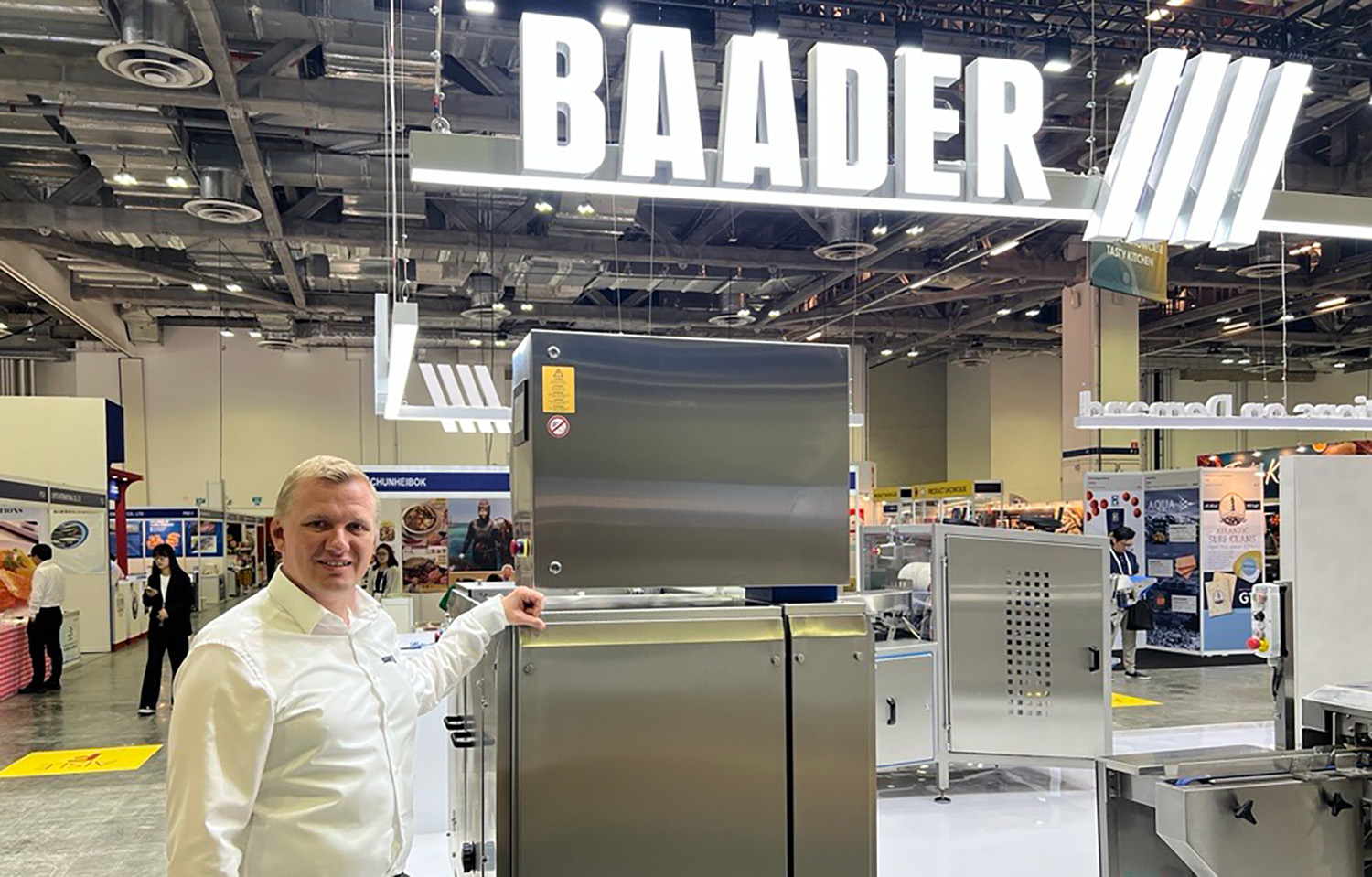
“With the money that people have increasingly available, they want to access better food. They are thinking, ‘Maybe I can now treat myself with fish or other seafood options like shrimp,’” BAADER Asia CEO Marcel Franz told SeafoodSource at the 2026 Seafood Expo Asia.
Franz said that processing in Asia, which is the worldwide leader in seafood supply, has traditionally been dominated by Chinese firms, especially in products destined for export markets.
In most Southeast Asian countries, a few “big players” like Thai Union and CP Foods, focus on exports, but processors targeting their own domestic markets, such as canning operations in Indonesia and Thailand, remain comparatively small.
But, with growing domestic demand across Asia, Franz said companies may soon have ample opportunity to capitalize and scale.
“Processors are no longer just making fillets and exporting them. They are now also looking into how they can value add and sell domestically … because that largely leaves them out of the worldwide price fight,” he said. “The global market is driven by multiple factors where [a firm] might not be able to compete, but domestically, you might have chances due to logistical advantages such as being closer to the consumer. The competitive advantage of China, which has been referred to as the ‘workbench of the world,’ is dwindling a bit.”
As processing opportunities grow, Franz predicted that consolidation is likely to follow, and those mergers may result in firms specializing on a few key species instead of the current landscape where smaller companies in Southeast Asia may process as many as 20 species at once. Additionally, companies will increasingly look toward automating their operations in order to scale effectively.
That latter trend is already playing out in such countries as Vietnam, where firms like Minh Phu, Vinh Hoan, and Navico, all of which are facing ongoing labor shortages, have all either actively invested in, or have plans to invest in automation.
For instance, Minh Phu CEO Le Van Quang told SeafoodSource during the 2026 Vietfish International Fisheries Exhibition that his firm aims to eventually automate around 70 percent to 80 percent of production, leaving workers responsible for the remaining 20 percent to 30 percent. He further explained that a robot can perform roughly three times the work of one employee and operate across three shifts 24 hours a day, allowing one robot in some applications to replace the output of about 10 workers.
Different countries in the region are at varying levels of preparedness to capitalize on growing demand, however.
Franz said that Vietnam, Indonesia, and India, all of which are major seafood-supplying nations with growing populations, stand ready to scale, whereas Laos, Cambodia, and Myanmar have potential that is much farther down the road.
“There is potential in the future, but it’s not there yet. There are political issues, and they are not as far developed as the others around them,” he said, adding that Japan’s shrinking population also leaves it with fewer domestic demand opportunities as other Asian nations.
Franz said that all of these trends leave BAADER in a good place to capitalize, too, as the firm already has a branch in Singapore, possesses a manufacturing plant in Malaysia, and offers specialized, automated machinery that can help firms grow.
He cautioned, though, that BAADER will have to continue developing localized and innovative machinery to align with shifting client demand in Southeast Asia.
“The trend is going toward full-line supply. Customers want turnkey solutions, and they don’t want to have to think about how to connect everything,” he said. “At the moment, there is no producer for tilapia-filleting machines, for example, but for fish like this and pangasius, we have to be there. There are a lot of Chinese companies that also build machinery.”
At this year’s Seafood Expo Asia in Singapore, BAADER displayed several machines targeting Asian clients that differed from machines the company would display at other trade shows in North America and Europe. Equipment included high-volume filleting machines for pelagic species, a flatfish split-cut machine targeting Japanese and Korean clients, a skinning machine that Franz said may draw interest from firms like Vietnamese or Chinese tilapia farmers, and more.
“I think we are ready to capitalize on the landscape quite well. If you are not there, you will miss out on opportunities,” Franz said.
