

A U.S. district court judge has ruled a Conservation Law Foundation (CLF) lawsuit launched against Cooke Aquaculture USA can move forward.
CLF announced its plans to file a lawsuit against Cooke in November 2024 and later followed up with court filings in 2025. The lawsuit claimed Cooke’s aquaculture operations in the U.S. state of Maine violated conditions of its Maine Pollutant Discharge Elimination System permits, along with the federal Clean Water Act (CWA).
Cooke moved to dismiss CLF’s compliant, but U.S. Magistrate Judge Karen Wolf ruled that CLF has sufficient standing to engage in the lawsuit and that its six claims that Cooke is violating the CWA are sufficient enough to move forward in court.
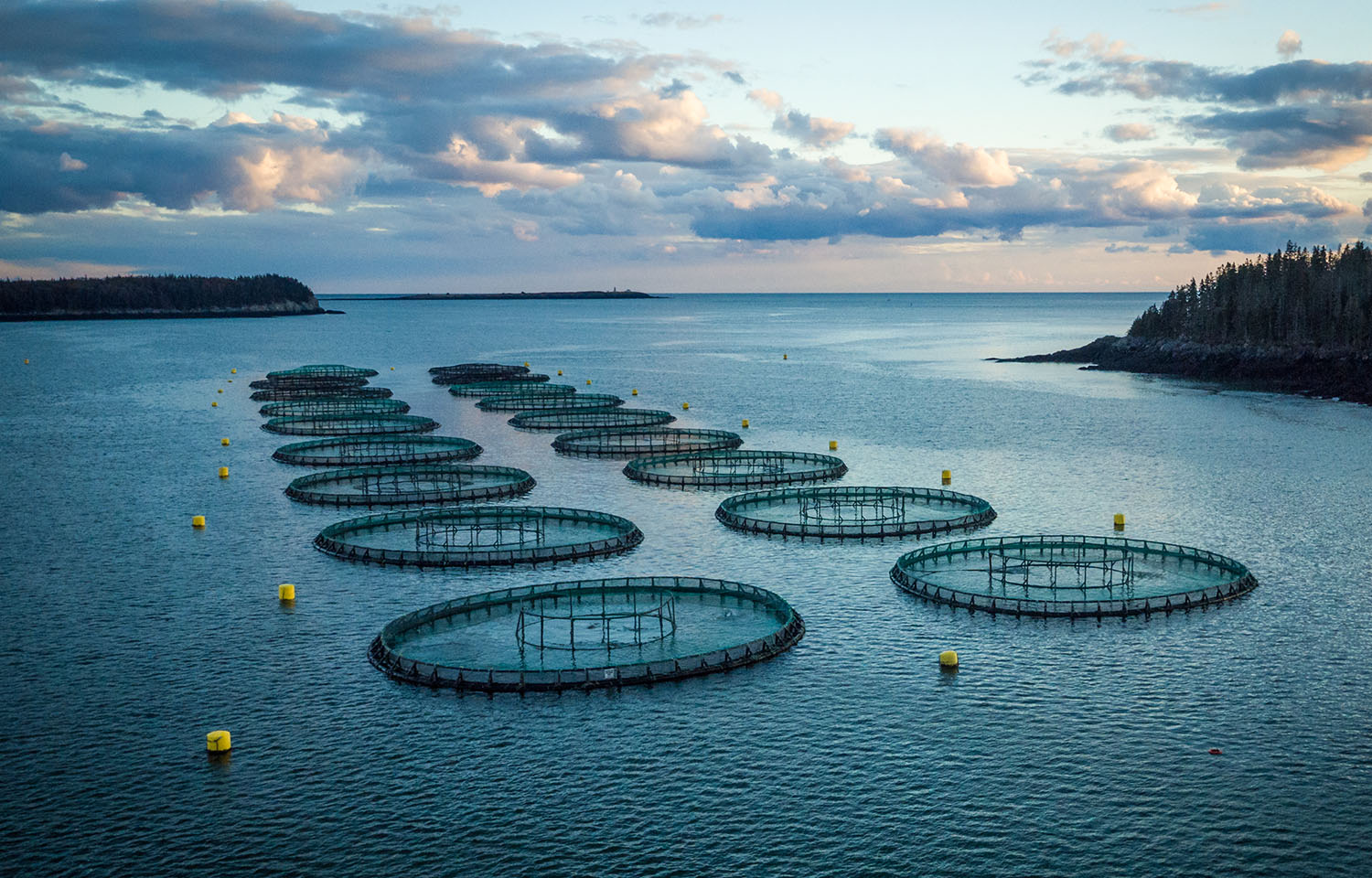
“This ruling brings us one step closer to protecting the health of Maine’s waters and the ecosystems, industries, and communities that rely on them,” CLF Senior Attorney Maggie Nivison said. “These enormous salmon cages are like sewage pipes to the marine environment. Accountability matters, and we need to enforce our laws to safeguard Maine’s bays and communities.”
CLF has engaged in a number of different lawsuits regarding both aquaculture and fishing in the U.S., including a lawsuit over U.S. President Donald Trump reopening the Northeast Canyons and Seamounts Monument to fishing, a lawsuit over the removal of vessel speed limits designed to protect North Atlantic right whales, and a lawsuit that found the Maine lobster fishery was in violation of the Endangered Species Act, which resulted in multiple years of lawsuits and the federal government stepping in to grant the fishery a reprieve from new rules.
In its lawsuit against Cooke, CLF claims the company is not meeting the requirements of its permits and targets 13 different sites: three sites near Swans Island, three sites near Eastern Bay, four sites in Machias Bay, and three sites in Cobscook Bay. It claims the farms dump pollution into surrounding waters and that it violates the standards of both its state and federal water quality permits.
“Fish feces, uneaten food, and uncollected pieces of dead fish fall through the bottom of Cooke’s cages onto the seafloor to form a thick layer of toxic sediment,” CLF said in a release. “That pollution kills food sources for lobster and bottom-feeding fish, like flounder, cod, and haddock.”
Cooke has persistently defended its operations in Maine and continues to deny that it has violated any standards at its farms.
“Cooke Aquaculture USA vehemently denies the generalized allegations brought forth by the Conservation Law Foundation,” Cooke said in a statement provided to SeafoodSource. “Allegations that Cooke is violating the Clean Water Act and Maine Pollutant Discharge Elimination System General Permit for Net Pen Aquaculture are false, misleading, and lack any substantiating evidence.”
Cooke said in the lawsuit, the judge has to assume allegations in CLF’s complaint are true in the preliminary proceeding, and the court made no findings of fact or reviewed any evidence, as it is not a full hearing on the case.
“The Court made no findings of fact and heard no evidence, and on that assumption-based standard, it nonetheless dismissed part of CLF’s lead claim regarding permit violations,” Cooke said. “Cooke’s evidence of compliance with its permit (comprising more than 1,200 pages) was not rejected. The Court simply held that this preliminary proceeding was not the correct time to review the evidence put forward. Cooke looks forward to presenting this evidence.”
The company said it is in full compliance of the laws and that its farms are regularly inspected and subject to regular monitoring reports.
“These laws are designed to protect Maine waters as well as Maine’s heritage fisheries,” the company said.
Maine Aquaculture Association Executive Director Sebastian Belle also criticized the lawsuit, pointing out CLF played a part in establishing the rules that Cooke operates under.
“The environmental community knew what outcomes they wanted to see, and the salmon growers had the technical knowledge to design solutions that achieved those outcomes,” Belle wrote in a 2024 op-ed for SeafoodSource. “We also all agreed that having the federal and state regulators be part of the process was vital and would result in solutions that were both effective and linked to enforcement tools.”
Belle said it is “a surprise” that CLF is now suing over those same standards they helped create.
“Maine has always been about working cooperatively to develop practical solutions; perhaps we have lost that tradition,” he wrote.
