






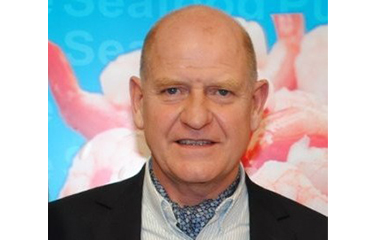
Veteran seafood trader Didier Boon said he believes the success of the proposed China-Ecuador free-trade deal, which is expected to be signed by December 2022, won’t succeed if Ecuador doesn’t kowtow to China’s global political agenda.
Boon, the managing director of Beijing-based East China Seas, which imports seafood to China and supplies buyers in the E.U., U.S., and Latin America with processed seafood from China, said China’s effective abandonment of its trade deal with Australia after the latter questioned China in international fora about the origins of COVID provided a cautionary tale of how China is willing to weaponize trade to achieve foreign policy goals. China’s de facto ban on Australian goods and a propaganda campaign against the country turned Chinese buyers off the country’s imports and resulted in an industry-led review of Australia’s national seafood export strategy.
“If Ecuador sustains the spirit by, for example, refusing America’s call to boycott China and Chinese 5G equipment … As long as Ecuador supports China, it will be easy,” Boon said. “Chinese people will be less afraid of buying from Ecuador and the import situation will be easier than before. Nowadays everything has become politicized.”
Even without the trade deal in place yet, Boon said he’s getting more inquiries recently from Chinese buyers seeking potential suppliers from Ecuador – as well as Iran – amid increasing optimism about an easing of China’s zero-COVID policy. According to Rabobank Senior Seafood Analyst Gorjan Nikolik, the impact of a China-Ecuador FTA will depend on how much and how quickly China’s economy reopens through the tail-end of the COVID pandemic crisis. There has been speculation that China will taper its zero-COVID policy in the wake of the Chinese Communist Party offering Chinese President Xi Jinping an unprecedented third term, Boon said.
“A lot of people are hoping that there will be easing of the policy after the [Chinese Communist Party] Congress,” Boon said. "I didn’t get any inquiries for three years and now I have guys asking me about potential supply from Ecuador.”
The zero-COVID policy has led to a deceleration in economic activity, with the World Bank predicting that, for the first time in decades, China will underperform the wider Asia region in GDP growth in 2022. However, on 16 October, Xi defended the policy in a speech in advance of the Communist Party Congress. Boon said it is his opinion China will carry on with its zero-COVID policy into 2023, referencing Xi’s speech, which commended China’s approach to controlling the pandemic.
The pandemic caused many Chinese seafood importers to pause operations due to the risk of being caught up in new controls, Boon told SeafoodSource. China’s COVID restrictions forced Boon to stop importing shrimp from Ecuador two years ago, though he said major Ecuadorian suppliers have continued to work with large Chinese state-owned firms.
“It is too risky if I am a medium-sized player handling two or three containers at a time,” he said. “If anything goes wrong, you are between the hammer and the anvil.”
Regardless of whether it’s completed, China’s FTA with Ecuador is largely irrelevant for the massive shrimp trade between the two countries, Boon said.
“To the end consumer in China, it won’t be a big difference. It’s not like pangasius, where USD 0.10 or USD 0.15 [EUR 0.10 or EUR 0.15] makes a difference to the buyer,” he said. “Shrimp is a middle-class product.”
Boon said to keep trade flowing, some major suppliers in Ecuador are allowing Chinese clients to pay after shipments have cleared customs. Despite those unusual circumstances, Boon said China has seen a sharp slowdown in demand from key export markets, which he attributes to slowing consumption as inflation rages and recession looms in China and globally.
“Our main business is export and that had been steady. We grew sales by between 20 and 30 percent in 2020 and we maintained sales levels in 2021, but in 2022, our sales will drop by 10 percent,” he said. “The European market is terrible. A French client told me recently that a lot of people have stopped buying seafood.”
Photo courtesy of Didier Boon
