






Negotiators have been working for over a year to secure a strengthened World Trade Organization (WTO) deal on ending harmful fishery subsidies.
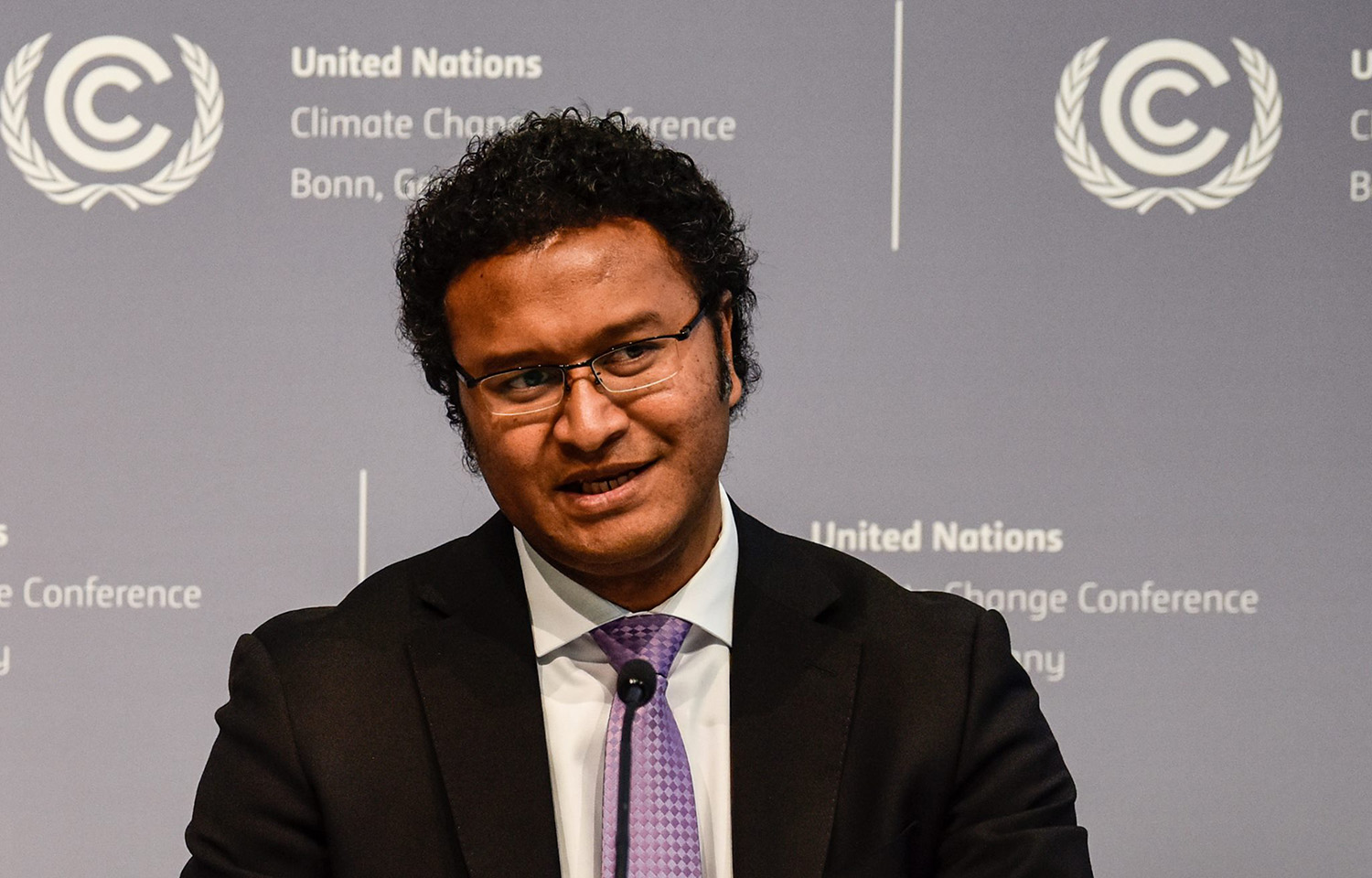
Luke Daunivalu is the Fijian ambassador to the United Nations (UN) bodies based in Geneva, Switzerland, including the WTO. He talked to SeafoodSource about how realistic the prospects for a deal are and why he is wary about large nations fulfilling their obligations under a deal if it does reach an agreement.
The deal currently on the table, the draft text of which is commonly referred to as Fish 2, concerns ending subsidies that lead to overfishing and overcapacity. It seeks to build on a deal struck in 2022, commonly referred to as Fish 1, which prohibits subsidies to operations engaged in illegal, unregulated, and unreported (IUU) fishing activities. That 2022 deal still hasn’t been ratified by a majority of WTO members.
SeafoodSource: What is the current status of the negotiations on Fish 2? Are negotiations ongoing, or are they currently paused?
Daunivalu: It’s an ongoing process since we missed the opportunity in Abu Dhabi at Ministerial Council 13, where we couldn’t get Fish 2 agreed. We have continued in Geneva and hope to conclude it as there were only a few elements we couldn’t agree on in Abu Dhabi. July was the date we’d targeted for a deal, but now we are continuing work on it with the chair of the talks [Einar Gunnarsson].
The key issue involved least developed countries’ concerns regarding the gradual period to implement the agreement within the time frame proposed. That poses a big problem for developing countries.
Other elements we are now focusing on addressing is what to do with small-scale artisanal fisheries in a way that doesn’t afford room for overfishing.
We are also seeking more clarity on disciplines for major fishing countries with distant-water fleets.
SeafoodSource: Are you optimistic that a deal can be signed this year?
Daunivalu: We remain hopeful given the urgency of getting something in place that curbs the open regime currently in effect. We have meetings between now and December. We are working hard with the chair and engaging bilaterally.
Another concern of the Fiji and Pacific islands is that the current text should not be watered down more. We have added elements such as a review clause that wasn’t there in Abu Dhabi, which allows for reviews.
It’s now in the next text. We don’t want to weaken the text. Other members are concerned that disciplines are not strict enough. Other members want to address gradual implementation and differential treatment for developing countries.
SeafoodSource: Why is this deal important to Fiji?
Daunivalu: It’s crucial for Fiji because we want to reduce subsidies that deplete our resources. Our food security and our coastal communities’ livelihoods depend on fish. Responsible fishing practices bring long-term economic stability.
We manage Pacific waters relatively well, but IUU fishing is happening; without any regime in place, overfishing and overcapacity will continue. Therefore, we need a mechanism with one common rule standard.
SeafoodSource: To what extent is Fiji's position at the talks aligned with or different from the position of other developing countries, such as India, for example?
Daunivalu: By and large, Fiji’s position is in line with that of other developing countries. We advocate special differential treatment for developing countries. We need strong disciplines in place to curb harmful fishing subsidies, but there are also nuances of different regions in negotiations, particularly with regard to environmental sustainability.
We work closely so that the final text captures the interests of developing countries.
We cooperate with the Africa, Caribbean, and Pacific group with which we have more or less similar interests, but we understand the text on the table reflects those nuances.
India has been introducing papers that support their interests, but these include elements that we have already had a long time to consider. The ACP group has been working with India to see how the current text can be tweaked to include what they are calling for. By and large, most members have invested so much time to understand the different positions. It’s not clear how much longer or how many new things can be brought in.
SeafoodSource: What are the benefits of the Fish 1, for Fiji and are you hopeful it will come into force soon?
Daunivalu: The first thing that needs to happen is for the Fish 1 deal to come into force. A total of 85 countries have now ratified it, and we need at least 110 to bring it into force.
Once it comes into force, there are many benefits for us. Prohibitions of subsidies for IUU immediately kick in. We hope members are already looking at addressing that in domestic laws before Fish 1 comes into force, though.
Also, the deal promotes accountability in fish management, so we have reasons to be positive.
SeafoodSource: Does the deal mean that a country with vessels found to be fishing illegally will be required to penalize the individual fishing company or vessel guilty of IUU?
Daunivalu: You can’t do it unilaterally. It has to be reported, and it will have to be decided by a committee at the WTO. These mechanisms are within the remit of the WTO.
SeafoodSource: You mentioned earlier this year that you were very worried that large nations will use their wealth and legal teams to circumvent any deal in regard to reporting to a WTO committee. Are you still worried, or has the newer draft text helped ease your worry?
Daunivalu: Concerns remain … but we want to establish through the agreements that reporting obligations will impose a curb or a constraint to do the right thing by being transparent and open.
The Fish 2 text has introduced transparency and monitoring mechanisms, and we hope all members are compliant, regardless of the size of the country. The reporting mechanism for these agreements are always challenging. It’s incumbent on each member to be fully transparent.
Fiji is already struggling with so many reporting obligations as a WTO member. We take that on the chin because we see that it benefits us in a wider sense, but bigger countries have to be faithful and true, too. We attend meetings so we can track what they are reporting true.
Smaller WTO member states have capacity constraints; if we are not sitting there and tracking reports, we may miss it.
As a small [delegation] in Geneva, we cover multiple bodies like the WTO and various UN bodies. But, larger countries have two ambassadors and the resources to report and follow discussions. We don’t know if these larger countries are reporting fully and transparently unless we see, read the reports, and check.
SeafoodSource: You have stated your wish to keep access agreements out of WTO talks, but a lot of NGOs and some governments feel this acts as a subsidy given by big fishing powers like the E.U. and China. Is this a fair point?
Daunivalu: It’s not that we want to keep access agreements out of Fish 2; it’s the confidentiality regarding prices that we are concerned about.
There are elements that are more bilateral in nature. In the Pacific in particular, the majority of countries in the region are predominantly dependent on fisheries. If you release the full details of the access agreement, you open your own books to the world.
SeafoodSource: Is a plurilateral deal a realistic option if negotiations on Fish 2 fail?
Daunivalu: We believe in multilateralism, and every member needs to be on board for rules to be implemented. Everyone buys into it. Plurality has only picked up pace in recent years because mechanisms of the WTO have not been working.
There needs to be consensus because for all its criticism, there is still a level of stability in how the WTO works. If every member does not buy in, there will always be a disparity and problems with implementation. Therefore, we are hopeful that Fish 2 gets everyone on board. If it doesn’t happen, we need to keep working to get everyone on board.
