




Just a handful of years ago, surveys in the U.S. showed cod, haddock, and species like hake showing up on restaurant menus and in the consumer consciousness, but pollock was an afterthought with barely any acknowledgement of its existence.
According to Genuine Alaska Pollock Producers (GAPP) CEO Craig Morris, pollock recently surpassed haddock in terms of brand awareness for the first time in the U.S.
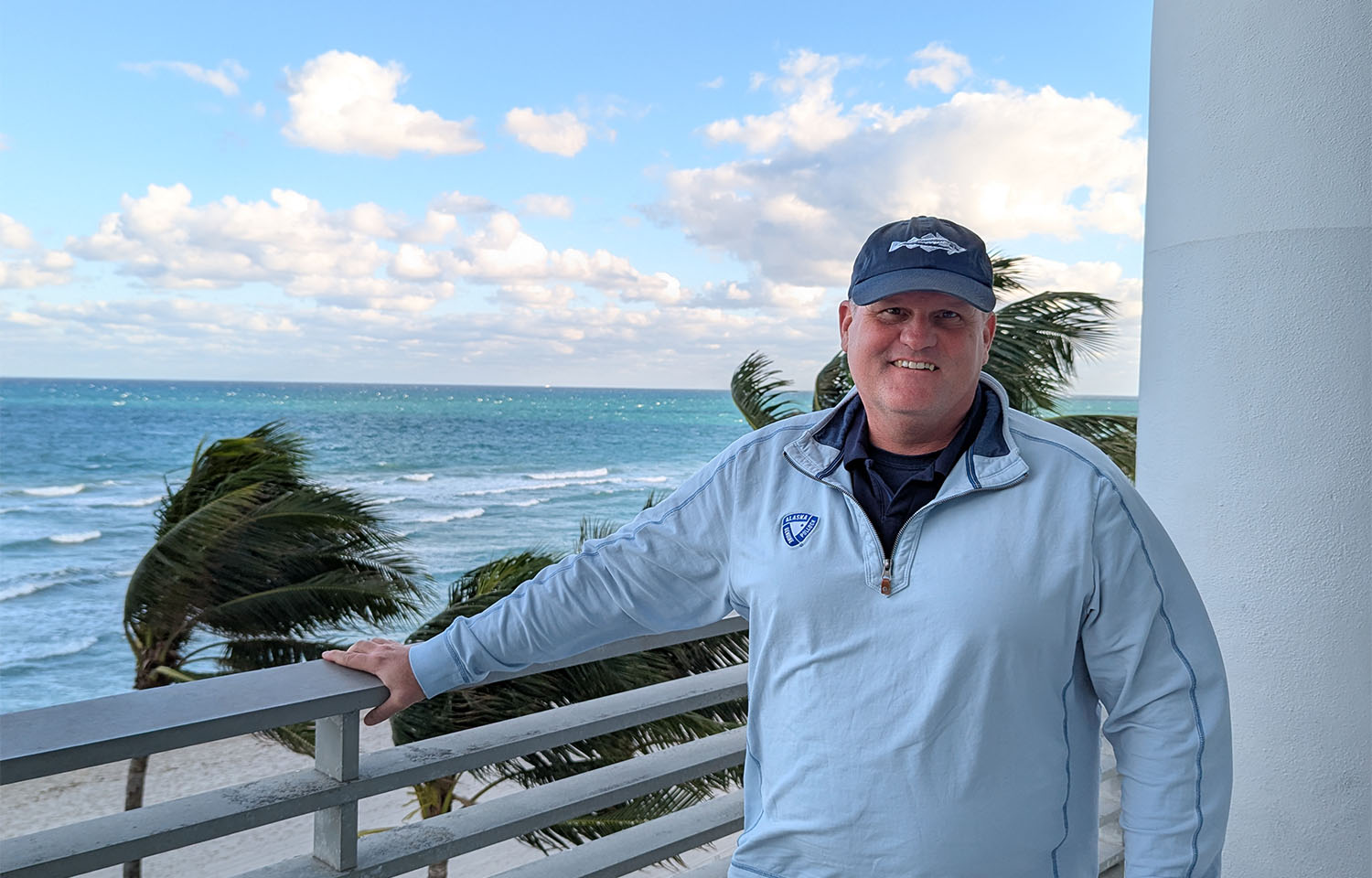
“I think there’s been a sea change at GAPP; for our first five years, we really were focused on it not being an anonymous whitefish – to be a fish that people knew what it was and it had an identity,” Morris told SeafoodSource during the 2026 Global Seafood Market Conference, which took place in Hollywood, Florida, U.S.A., from 18 to 22 January.
Morris was named GAPP CEO in 2018 and has spent the last seven years working to accomplish that goal. He said consumer data in multiple markets is showing that the push has been effective, with extremely strong brand awareness both domestically in the U.S. and internationally in places like Germany.
As the brand awareness increases, GAPP’s mission is changing, he said.
“I think now we’re going to pivot away from getting customers to be familiar with the name Alaska pollock and much more on that business to business. What can we do to support our customers?” Morris said. “Our goal now isn’t to have people know that there’s a fish called Alaska pollock; it’s how we can make our product as valuable to the customers as possible.”
He said in 2026 and 2027, that effort will take multiple forms, though the exact details of what GAPP will do in this year will have to wait until its board passes its plan for the next fiscal year.
“I can say the guidance I’ve gotten from my board are our priorities in 2026 and 2027 will look a lot like our priorities [in 2025],” Morris said.
Some of that will be continued efforts to market pollock domestically, which in some cases entails reputational defense of the fishery. The pollock industry has been subject to lawsuits by groups claiming the fishery is responsible for the decline in other species, such as halibut and wild salmon.
“We have to wade into it. I think under our umbrella of the Alaska Pollock Fishery Alliance, we really have to be transparent. I think it’s a very fact-based campaign, and I think there are a lot of misconceptions out there,” Morris said.
He pointed out that the Alaska pollock fishery isn’t associated with much halibut bycatch at all and that keeping things fact-based can ground the conversation.
“There are factual things that we can say, but on the same token, we’re all fishermen, and I don’t think it’s going to serve anyone well if we’re out there saying a misdirected arrow should have been shot at somebody else,” Morris said. “It is our responsibility to tell our story, to identify where there are gaps in those stories and fill those with research.”
In addition to the domestic market, GAPP is working to target international markets, Morris said.
“We have, already, three international grants from the [United States Department of Agriculture] we’re going to be working on this year, one in Brazil, one in Colombia, and one in India,” he said. “We have proposals coming in for Latin America and Europe as well, so we’re going to work on a lot of international B2B.”
GAPP is also pursuing a grant from the USDA to support its efforts to market to Europe.
“We really want to support the market this year,” Morris said.
Looking even further forward, Morris said he’s not worried about any increased competition for Alaska pollock from its counterparts in the Russian fishery. Russia has been heavily investing in modernizing its fishing and processing capabilities in recent years, which he said will actually benefit Alaska’s fishery, as well.
“When I joined the fishery, one of the things I was taught, and I still believe, is that the greatest challenge that U.S.-caught once-frozen Alaska pollock has on the market is the existence of an inferior quality twice-frozen product,” Morris said.
Morris said if a consumer has a bad experience with pollock, they’re not going to associate that bad experience with anything other than the fish itself and are likely to completely abandon the species.
“It’s really difficult to communicate with a consumer if they have a bad experience with pollock that there’s another type of pollock out there,” he said. “If there’s inconsistency in the market, they just write off the whole species.”
Morris said the fisheries are also not scalable since they are wild-caught, meaning there will always be a maximum supply of fish and a higher-quality frozen item only benefits the species’ reputation.
“Geopolitical concerns aside, long term, if you step back and really look at it, the investment that Russia is making into its fleet I think is good for Alaska pollock and good for seafood,” Morris said. “Hopefully we get past all these near-term geopolitical issues.”
As for the near term, Morris said that the demand for the product is strong, and he predicted that it would be a high-demand year for pollock fillets.
“Domestically, internationally, I think the stars have aligned for Alaska pollock fillets,” he said.
