




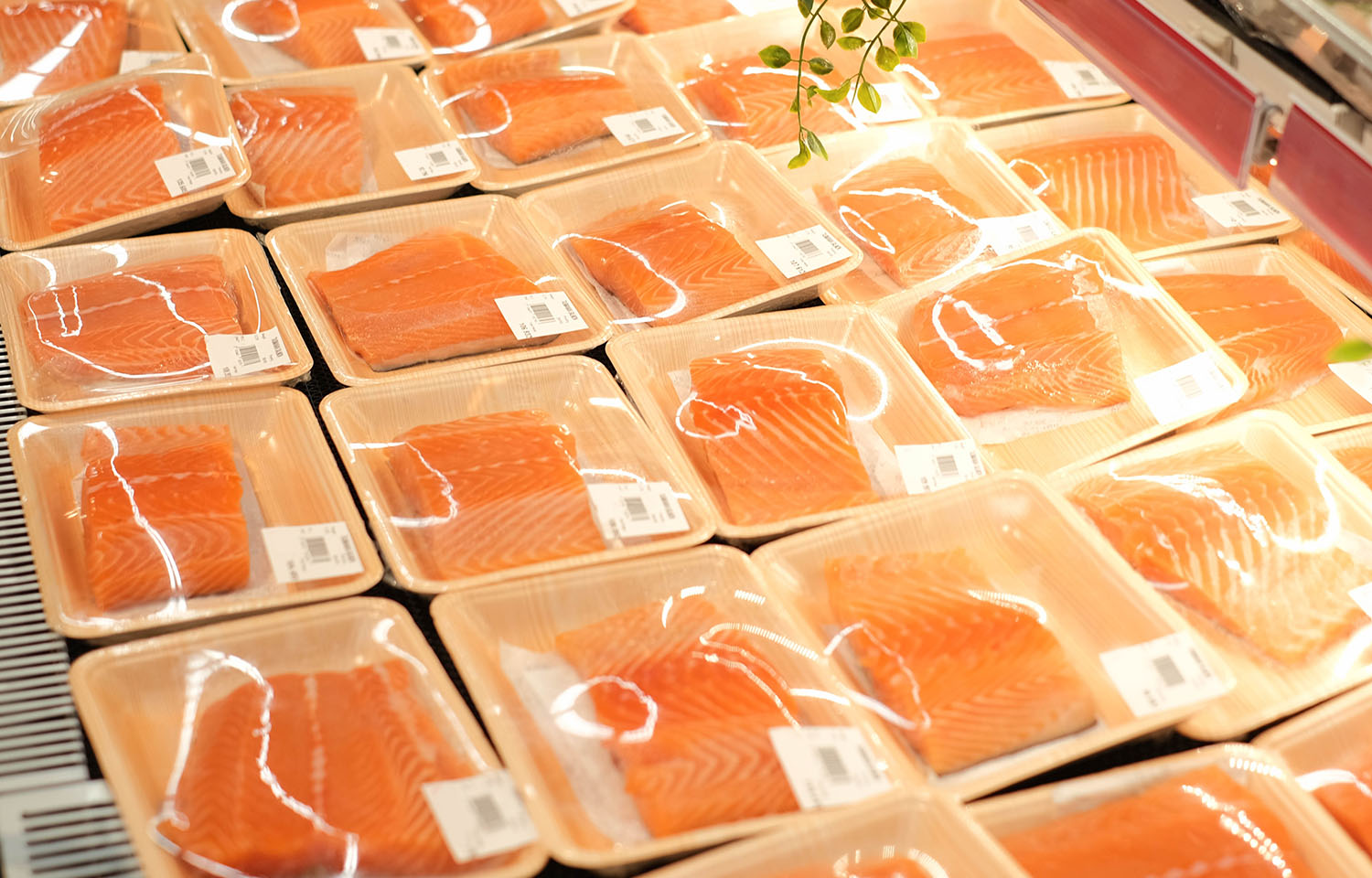
A surge in the amount of salmon Norway is shipping to the U.S. has a law firm representing the salmon industry keeping a close eye on whether the country’s exports could be considered “dumping,” which would lead to federal trade action and additional duties on Norwegian salmon.
The latest trade data released by the Norwegian Seafood Council (NSC) indicates Norway’s salmon exports to the U.S. have surged in 2025.
According to a recent NSC report, Norway’s exports to the U.S. increased 63 percent by volume in May 2025 compared to the same month a year prior. That same report also said the U.S. has been the largest growth market in terms of value for Norwegian salmon for five months straight, and so far in 2025, the country has exported 36,000 metric tons (MT) of salmon to the country – an increase of 56 percent by volume.
That increase in volume is coming as Norwegian salmon prices are dropping. NSC Seafood Analyst Paul Aandahl said in the council’s report that there has been a “record-breaking weakening of the salmon price” so far in 2025, and according to the NSC, the average price for 1 kilogram of salmon in May 2025 fell by NOK 40.88 (USD 4.06, EUR 3.55) compared to May 2024, the largest year-over-year drop ever recorded.
Those low prices are corroborated by the Sitagri salmon index, which reflects weekly spot prices for fresh Atlantic salmon transported from Norway to Europe. According to the index’s latest report on pricing in week 22 of 2025, the price has dropped nearly 23 percent over the last 12 weeks.
The high volumes of salmon coming into the U.S. as prices continue to drop has caught the attention of law firm Kelley Drye & Warren, which covers international trade in the U.S. The firm is analyzing whether the surge could constitute “dumping” of the product – which would make Norwegian exports a target for antidumping duties.
“With everything that is going on right now, we are watching with great concern the volume of imports that are coming in from Norway and the pricing of imports,” John Herrmann, the chair of the firm's International Trade practice and an expert on antidumping and countervailing duties, told SeafoodSource.
Herrmann said Kelley Drye & Warren has represented the U.S. industry producing Atlantic salmon for over 30 years, and the firm’s work contributed to prior antidumping and countervailing duty orders from the U.S. Department of Commerce (DOC) and the U.S. International Trade Commission (ITC) on fresh and chilled Atlantic salmon from Norway.
In April 1991, the U.S. ITC issued a final determination for the purposes of antidumping and countervailing duties, concluding the U.S. industry was being materially injured by salmon imports from Norway. That finding led to additional duties on salmon shipped to the U.S. from Norway, and those duties stayed in place for over 20 years.
The U.S. government ultimately lifted the 24 percent antidumping tariff in February 2012, and at the time, the NSC said the removal would likely not cause a large increase in sales of fresh whole Norwegian salmon to the U.S. In 2012, salmon from Norway made up 13 percent of U.S. salmon imports.
Over 13 years later, Norway’s statistics indicate it now accounts for 23 percent of all imports to the U.S.
That increase, coupled with low prices, is what caught Kelley Drye & Warren’s eye, Herrmann said.
“We feel like we’ve seen this movie before, and it’s something we’re watching very closely,” Herrmann said. “I think what’s been particularly concerning to us is some of the recent reports that we’ve seen out of Norway of the glut of production that’s becoming available and the volume of Norway’s exports to the U.S.”
The NSC’s reporting mentioned increased salmon production in both Norway and globally as a reason for the drop in pricing, and major salmon-farming companies like Mowi have acknowledged the high supply of salmon in Norway – though Mowi CEO Ivan Vindheim said the supply growth was a one-off situation after three years of challenging biology.
Herrmann said official U.S. import statistics – which are only updated through March 2025 – already show the increase in imports, and media reports and the NSC’s statistics indicate that the increase only grew through April and May.
“That’s something that we’re watching very carefully and keeping our finger on the pulse given the injury that Norwegian products have caused the U.S. industry in the past,” Herrmann said.
Herrmann also pointed to media reports containing anonymous accounts of exporters saying they have been forced to sell salmon at below the cost of production. While those reports aren’t enough to pursue trade action, they do catch the attention of the industry, he said.
Herrmann said the cost of production is a key factor in any potential trade action by the DOC and ITC. Normally, when the two entities make determinations on whether dumping is occurring and if there should be antidumping duties, the key factor is whether companies are selling products in their home country for more than they are selling those same products in the U.S. However, the cost of production is also a major factor in those determinations.
“If the home market prices are less than the cost of production, the commerce department will throw those prices out and basically rely on the cost of production to set the normal value or the home market price; that becomes the point of comparison to sales in the U.S.,” Herrmann said. “Even if the home market price is low, it can still be dumping to the extent that they’re selling below the cost of production.”
Herrmann said that for now, the firm is still evaluating whether there’s any potential for trade action at the federal level and keeping an eye on the official U.S. trade data – which is what the DOC and ITC will use when evaluating any petitions for relief. In order to gain any relief, both the DOC and ITC need to independently reach the conclusion that dumping is occurring, and after that, the departments would determine what the relief would be – a prospect which would take months of review and commentary from both the U.S. and Norwegian industries.
“What we’re focused on is making sure that we do what we can to protect the industry here in the United States and make sure that the jobs that the industry supports here remain unaffected,” Herrmann said.
