






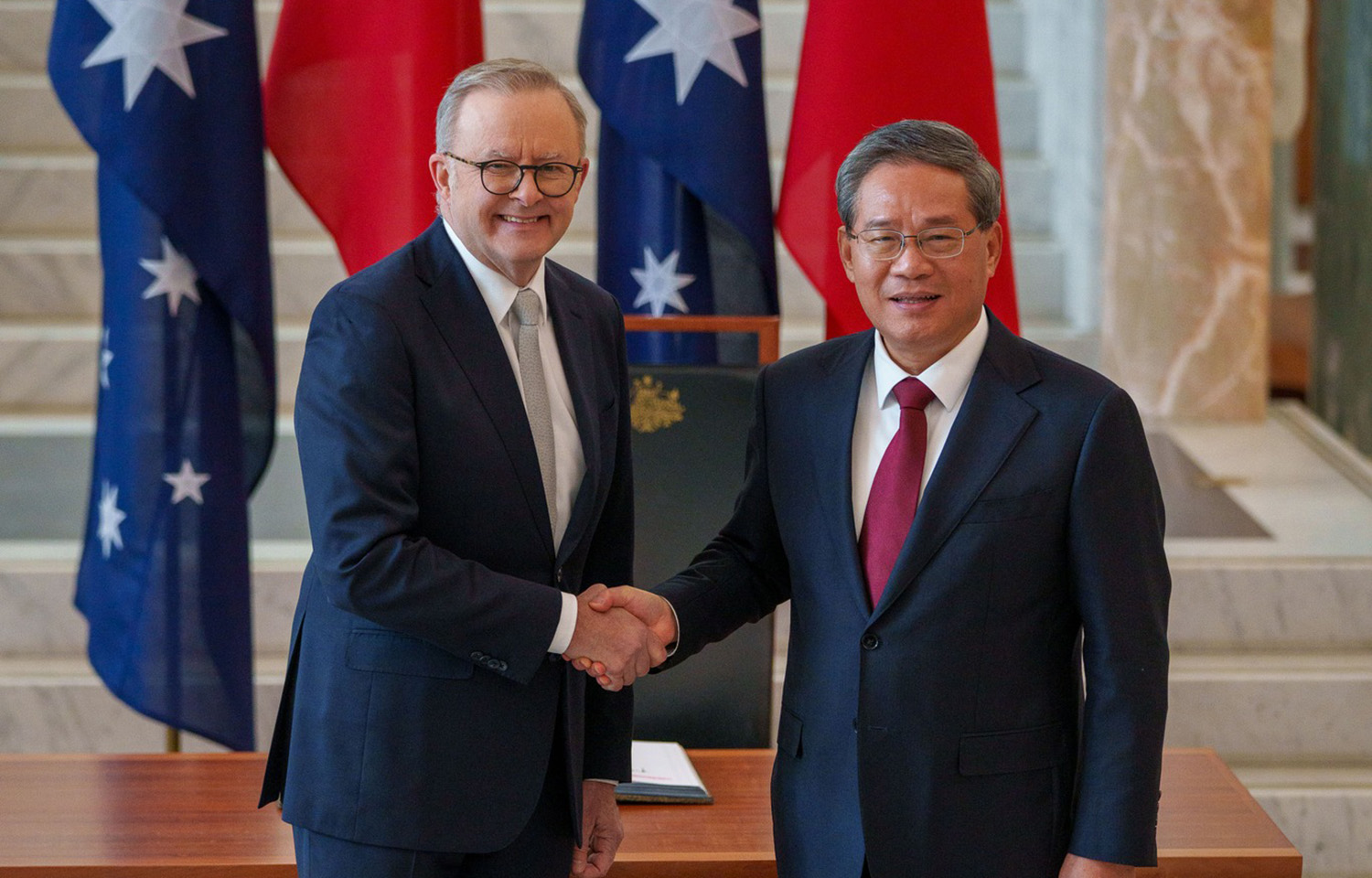
A reopening of the Chinese market to Australian lobster imports may be imminent, according to Australia Federal Minister for Trade and Tourism Don Farrell.
Lobsters were one of several key export commodities to get caught up in a political dispute in 2020 when then-Australia Prime Minister Scott Morrison questioned China’s handling of the outbreak of Covid-19 and suggested its origin in China be further investigated. Chinese trade authorities unofficially banned Australian lobster and wine from entering the country, and while rumors have swirled for years about a thaw in the dispute leading to a resumption of trade in those goods, the Chinese government has not yet completed any policy change.
However, China Premier Li Qiang visited Australia on 18 June and discussed trade and food safety with current Australia Prime Minister Anthony Albanese. Those conversations had relevance to the country’s lobster exports to China, as Australian lobsters have not been able to clear Chinese customs.
“The government’s steady engagement with China has resulted in the removal of almost all trade impediments on Australian exports to China. Prime Minister [Albanese] used the visit to advocate for the removal of remaining impediments,” The Australia Prime Minister’s Office said in a statement.
Australia Federal Minister for Trade and Tourism Don Farrell said on 28 June that AUD 456,000 (USD 301,000, EUR 283,000) in funding from the regional government of Southern Australian would go toward helping the seafood industry reengage with the Chinese market
“Virtually overnight, South Australian lobster exporters lost their most valuable market, worth AUD 70 million [USD 46.2 million, EUR 43.4 million] at its peak,” Farrell told Sky News Australia. "I'm very confident that in the very near future, [after the] recent visit by the Chinese premier and the Chinese state minister, that we will get the final product that has been the subject to these impediments back into the Chinese market.”
In the first four months of 2024, lobster exports from Southern Australia were valued at AUD 41 million (USD 27 million, EUR 25.4 million), with AUD 24 million (USD 15.8 million, EUR 14.8 million) going to Hong Kong – some of which is entering mainland China – and AUD 14 million (USD 9.2 million, EUR 8.7 million) shipped to Vietnam.
Farrell said the funding is designed to ramp up Australian export capacity to China but also to continue a plan to diversify the seafood sector’s markets, following a plan laid out in 2022 by Seafood Industry Australia.
“They're getting ready for that change ... to ensure wonderful South Australian rock lobster quickly gets back into the Chinese market but, more importantly, develops alternative markets,” Farrell said. “We don't ever want to find ourselves in a situation where you're so dependent on one market that if something goes wrong you create problems for jobs and prosperity."
The reopening of the Chinese market could boost Australian lobsters at a time of bumper supply and lower prices. China has traditionally been a premium market for Australian lobster whose markings and color are regarded in the trade as superior to those of Boston lobster. However, in the absence of Australian lobsters, alternatives such as lobsters from Cuba have done well in the Chinese market.
A recent market update from the Geraldton Fishermen’s Cooperative, which operates the Brolos brand of rock lobsters from its headquarters in Western Australia, notes a “record-high intake received in May and June ... which has kept pressure on prices.”
In addition to the higher-than-normal supply from Western Australia, large exported volumes of North American lobster from Canada have weighed down export markets. Prices have dropped around USD 20.00 (EUR 18.40) per kilogram since the season opened in April.
“For us, it’s business as usual. We are none the wiser on any announcement but remain hopeful the situation will resolve in the near future,” Geraldton Fishermen’s Cooperative CEO Marc Anderson told SeafoodSource. “We are encouraged by the recent visit by the Chinese Premier and the ongoing dialogue between our two governments, but [there are] no changes to report at this stage.”
At the 2024 Seafood Expo Global, the Geraldton Fishermen's Cooperative announced the launch of a Brolos-branded range of frozen lobster retail packs that include individually packed cooked and raw spiny lobster in whole, half, and tail formats.
