




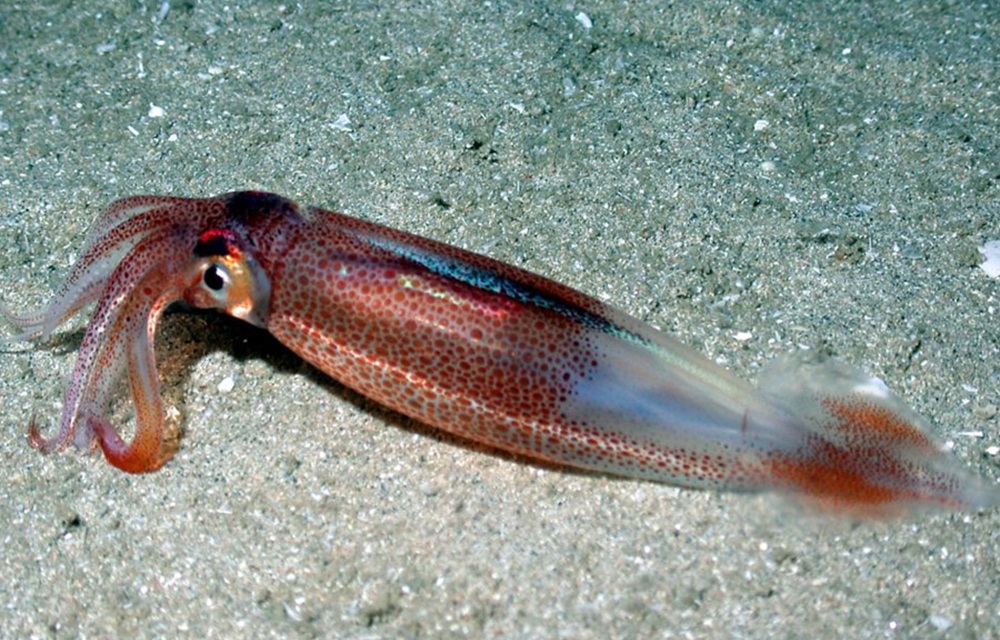
The U.S. Fish and Wildlife Service has proposed reclassifying squids and other cephalopods as shellfish, removing its responsibility for regulating those fishery products and ensuring they are regulated by NOAA Fisheries like other mollusks.
Current U.S. law describes shellfish narrowly as “an aquatic invertebrate having a shell.” Despite being mollusks and being considered shellfish by NOAA, squids and octopi do not have external shells, precluding them from falling into the shellfish category under U.S. law.
“Cephalopods, including squid, cuttlefish, octopus, and nautilus, are mollusks but are characterized by either an internal shell, a reduced shell, or no shell at all. As a result, the current regulatory definition has created ambiguity as to whether cephalopods qualify as shellfish for purposes of wildlife importation, exportation, declaration, inspection, and enforcement,” USFWS said in publishing the proposed rule.
In an October 2025 letter responding to U.S. President Donald Trump’s executive order “Restoring American Seafood Competitiveness,” the U.S. Small Business Administration’s Office of Advocacy noted that the ambiguity places squid harvesters in an unfortunate position where they are subject to NOAA Fisheries commercial fisheries regulations and USFWS wildlife regulations.
“As a result, small businesses that harvest squid are subject to unnecessary regulatory and financial burdens,” the office said.
According to the Office of Advocacy, U.S. companies involved in squid exports and imports are subject to a litany of USFWS fees and costs, including a USD 93 (EUR 80) base inspection rate for each squid shipment, a USD 100 (EUR 86) license, overtime fees, and a “non-designated port inspection fee” of USD 146 (EUR 126) per shipment.
“Small businesses are much less able to shoulder these unnecessary costs than their larger counterparts,” the office noted. “Advocacy recommends NOAA work with FWS to classify squid as either ‘shellfish’ or ‘fishery products’ to eliminate unnecessary, duplicative regulation by FWS.”
The Mid-Atlantic Fishery Management Council has long argued for such a change, telling the secretary of the interior in 2020 that “U.S. squid producers are subject to redundant, time-consuming, and costly licensing and inspection requirements” due to USFWS oversight.
“Virtually all other U.S. commercial fishery products are exempt from these regulations, which are intended to prevent the unauthorized trade of endangered and protected wildlife. We recommend that squid be reclassified as either ‘shellfish’ or ‘fishery products’ and therefore exempt from the USFWS inspection and user fee system,” MAFMC Executive Director Christopher Moore said in the letter.
MAFMC also included changing the definition of shellfish to include cephalopods in its list of proposed actions compiled in response to Trump’s executive order.
Now, USFWS has moved to make the change.
“This amendment would clarify that squid, cuttlefish, octopus, and other cephalopods are included within the regulatory definition of shellfish,” USFWS said in a 6 March announcement. “This action is deregulatory in nature, as it reduces regulatory ambiguity, aligns the Service's regulations with current biological understanding and commercial practice, reduces regulatory burden and is within the Service's purview to amend definitions as needed.”
USFWS is accepting public comments on the proposal through 6 April 2026.
