



A group of U.S. lawmakers has asked the federal government to provide financial support to the nation’s struggling shellfish sector, which they claimed has been hit hard by increased tariffs.
“Tariffs and retaliatory tariffs have led to higher consumer prices, altered supply chains, reduced availability, higher equipment costs, and market instability for farmers of all kinds, including shellfish growers,” the lawmakers said in the joint letter dated 6 February. “In the last year, our strongest trade partners have launched retaliatory tariffs against the United States, causing uncertainty and hurting geoduck, oyster, and other shellfish industries many of our communities rely on as lifelines.”
Addressed to U.S. Secretary of Agriculture Brooke Rollins, the letter claims that American shellfish producers have struggled with a decrease in demand due to tariffs raised by other countries in response to U.S. President Donald Trump’s attempts to levy “reciprocal” tariffs on major trading partners. One example is the Pacific Northwest geoduck harvest, 90 percent of which is typically exported to China. Tariffs, however, have made geoduck exports less competitive, the lawmakers said, with importers looking to other countries.
“We’ve heard personal stories from local shellfish growers in our districts. In Washington state, Chinese retaliatory tariffs have particularly troubled Tribal geoduck exports, leading them to conduct more dives to make up for loss of net revenue. As a result of this trade dispute, Canada is now the leading exporter of geoduck to China, hurting the industry here at home. In coastal communities nationwide, many small, family oyster farms have experienced downward trends in overseas sales compared to 2024 rates and now must make the hard decision to reduce prices in order to remain competitive,” the letter states.
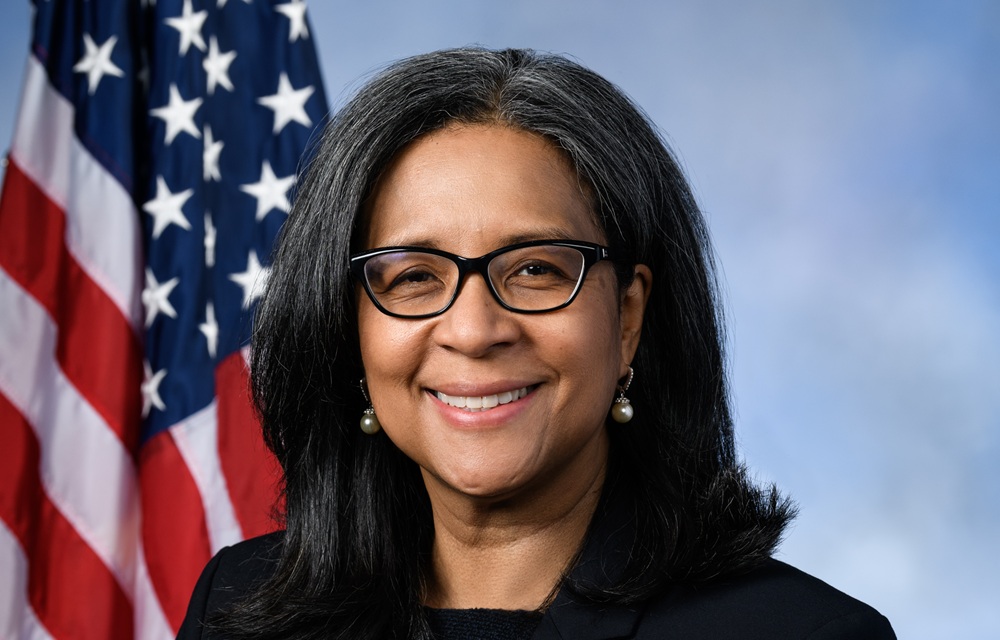
The letter was signed by U.S. Representative Marilyn Strickland (D-Washington), U.S. Representative Chellie Pingree (D-Maine), U.S. Representative Bill Keating (D-Massachusetts), U.S. Representative John Larson (D-Connecticut), and U.S. Representative Joe Courtney (D-Connecticut).
“Local producers are the backbone of communities. We must do our part to support them, especially when President Donald J. Trump continues to threaten economic stability,” Strickland said in a social media post.
To help domestic shellfish producers, the lawmakers asked Rollins to introduce a new version of the 2020 Seafood Trade Relief Program, an initiative launched at the end of Trump’s first term. The program provided up to USD 530 million (EUR 445.6 million) in funding to seafood businesses impacted by “retaliatory tariffs.”
“These same growers are experiencing similar turmoil of market uncertainty and lower export sales and would greatly benefit from aid once again,” the lawmakers said in the letter. “For many communities, aquaculture is a way of life, providing nutrient-rich diets, strengthening Tribal treaty rights, creating jobs, and boosting economic and food security. Please give these hardworking growers the certainty they need so their products and businesses can continue to thrive.”
The lawmakers also urged Rollins to fill the seafood liaison position created by Congress late last year. The position, which was included in continuing resolution legislation that reopened the federal government in November 2025, was designed to support “domestically harvested and processed wild and farmed seafood.”
