






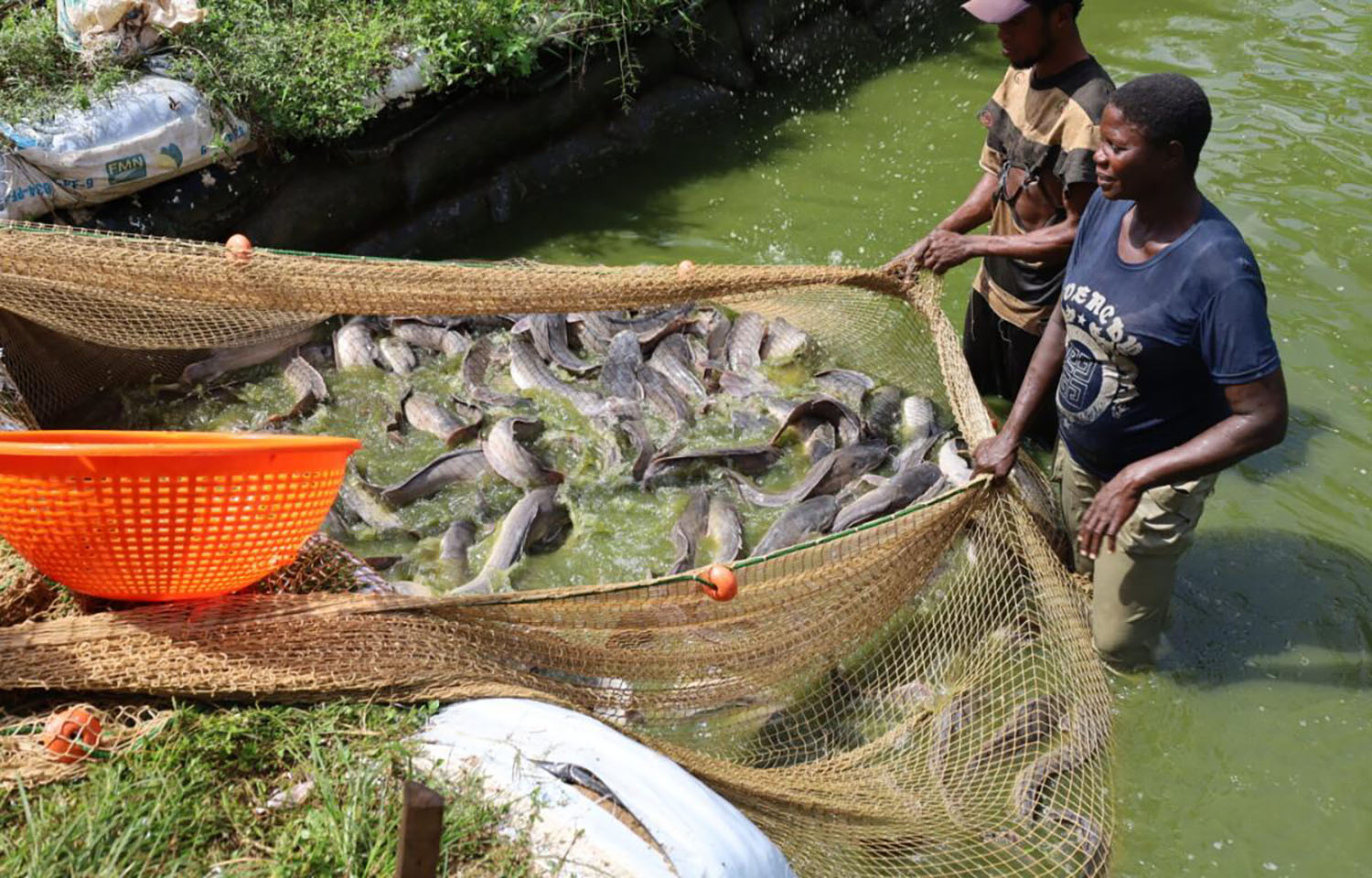
China has promised to buy more farmed fish from Nigeria.
In a recent meeting between officials from both countries, Chinese Ambassador to Nigeria, Yu Dunhai, told Nigeria Minister of Marine and Blue Economy, Adegboyega Oyetola, that China would sign protocols for the export of “Nigerian aquacultural products” to the Asian market, according to Nigerian newspaper Punch.
The move represents the latest seafood partnership between China and an African nation and came shortly after China’s announcement in July that it was introducing a zero-tariff policy for all African seafood products imported into China.
It also aligns well with Nigerian ambitions to scale up its aquaculture sector.
To that end, earlier this year, the state government of Lagos announced that construction had begun on the Lagos Aquaculture Center of Excellence, a NGN 10 billion (USD 6.4 million, EUR 5.6 million) project aiming to boost food security, job creation, and overall seafood output in the West African country.
The project is expected to utilize more than 50 million fingerlings annually, mainly comprising catfish – the dominant farmed fish in Nigeria – and produce over 2,000 metric tons (MT) of fish for direct consumption and sale.
The center will also manufacture 24,000 MT of fish feed annually, helping to address Nigeria’s current aquafeed shortages and lower prices for domestic farmers.
Besides boosting seafood trade, the new protocols also include intentions to boost further port development in Nigeria – a strategic priority China has pursued in several African nations and elsewhere across the globe to provide a logistical boost for the Chinese distant-water fishing fleet.
“China … has the potential to fill infrastructure capacity voids. Port construction and connectivity mean investment in landings, processing, transit, and trading points for Chinese marine catch,” Chinese academic Juan He at Shanghai Jiao Tong University said in a February report.
