


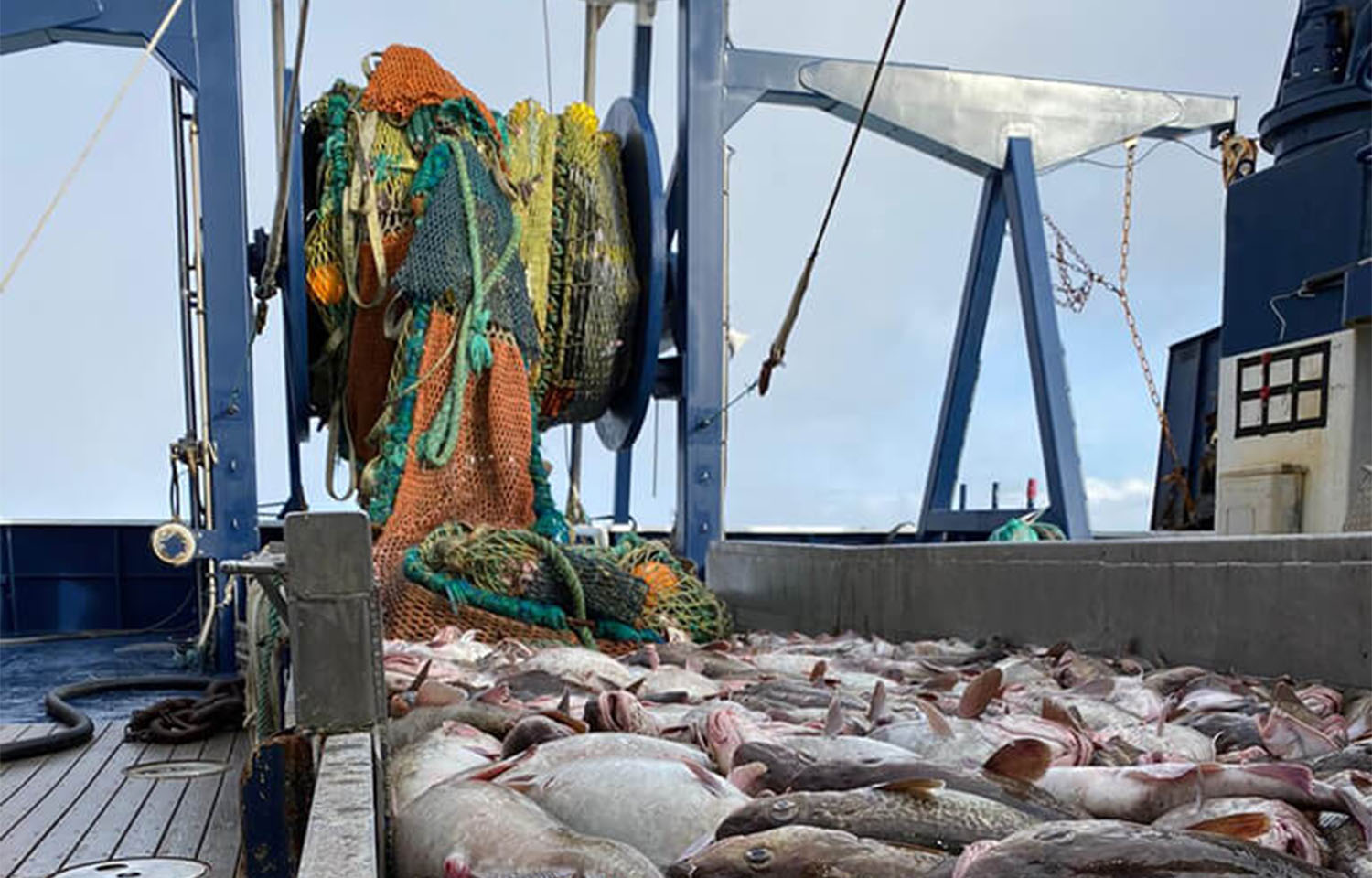
The North Pacific Fishery Management Council (NPFMC) has recommended a big increase in Gulf of Alaska (GOA) cod catch limits for 2026 and 2027.
The NPFMC’s latest action would increase the catch limit in the western and central Gulf of Alaska by 25 to 49 percent. The council’s revised recommendations would place the federal total allowable catch (TAC) for 2026 at 30,053 metric tons (MT), a significant bump from the 21,826 MT it recommended after a meeting in December. The acceptable biological catch (ABC) for the area was also increased to 41,250 MT.
That TAC is separated into the western, central, and eastern areas of the Gulf of Alaska. The western area received a TAC of 6,693 MT, the central a TAC of 21,549 MT, and the eastern area a TAC of 1,811 MT.
In a release sent about the decision, the NPFMC said the increase was the result of an updated Pacific cod assessment that the council requested early – in part due to the U.S. government shutdown in October.
The council said the shutdown, which lasted over a month, kept it from completing a planned stock assessment in 2025 that would have used 2025 NOAA trawl data.
“The assessment incorporates information from the 2025 NOAA bottom trawl survey, which observed a notable increase in GOA cod abundance, but the Council had no mechanism last December to respond to that increase without an updated stock assessment,” the council said.
Fishing organizations in Alaska pushed for the council to increase the TAC of cod given the stock assessments showing improvements.
“Beyond the biological justification, the socioeconomic benefits of adopting the recommended ABC increase are substantial,” the Midwater Trawlers Cooperative (MTC) said in public comments supporting the increased TAC. “Pacific cod is a cornerstone species for GOA fisheries and a critical component of the economic base for Kodiak and other coastal communities. Increased harvest opportunity would provide much-needed stability to vessels, shoreside processors, and the skilled workforce that depends on predictable fishing seasons.”
The MTC said the stock assessments show clear improvements in the stock status and spawning biomass, and the increases are based in sound science and will maintain the sustainability of the cod stock while helping sustain the coastal communities that rely on the cod fishery.
“Midwater Trawlers Cooperative strongly supports management decisions that are grounded in sound science, transparent process, and balanced consideration of ecological and human dimensions,” MTC said.
While the GOA cod stock has improved, a Science and Statistical Committee (SSC) report made it clear that the ecosystem conditions in the region in 2025 “appeared unfavorable for Pacific cod” and that residual heat within the water column could negatively affect the species in 2026.
The SSC also recommended reexamining the stock structure of Pacific cod in the Bering Sea and the GOA, saying there may be a need to reconsider the assessment and management of the species in the Alaska region in light of emerging information about the species’ migratory behavior.
