




Norway’s biggest salmon companies have each reported robust earnings in Q2 2023, continuing a streak of profitable quarters that have undermined their arguments against Norway’s recently imposed salmon-farming tax.
Speaking at the company’s presentation of its Q2 2023 results, which set its all-time quarterly record, Lerøy Seafood Chief Financial Officer Sjur Malm said his firm may have to shift strategies as a result of the tax.
“We fear that the long-term consequences will be negative when it comes to value creation,” he said.
SalMar, which ranks behind fellow Norwegian firms Mowi, Cermaq, and Lerøy as the fourth-largest salmon-farming company in the world, also continues to strongly oppose the new 25 percent aquaculture resource rent tax model and tax level approved by Norwegian Parliament at the end of May 2023.
Presenting his company’s Q2 2023 results, which showed SalMar enjoyed record earnings from its Norwegian operations, SalMar CEO Frode Arntsen said the argument against the tax made its consultation response in January 2023 “still holds.”
“The company will continue to argue for a review of the tax system and tax level for Norwegian aquaculture through close and fact-based dialogue with [the] authorities and decision-makers.”
Echoing a threat initially levied by Mowi CEO Ivan Vindheim, Arntsen said SalMar may eventually sue the Norwegian government over the tax.
“SalMar is open to legal steps in due course,” he said.
With Q2 2023 marking the first quarter of the resource tax’s implementation in Norway and with “high uncertainty” about the detailed rules of how to properly calculate the tax, Arntsen said SalMar has not quantified its full implications. It has, however, estimated the effect of the tax on its bottom line at about NOK 2.3 billion (USD 216.9 million, EUR 199.6 million).
Malm said Lerøy had paid NOK 1.7 billion (USD 160.2 million, EUR 147.6 million) in additional taxes since the imposition of the new law.
Mowi, while not revealing how much the tax has cost it thus far, has been the most vocal industry opponent of the tax, estimating it has resulted in NOK 40 billion (USD 3.7 billion, EUR 3.5 billion) worth of investments being put on hold.
Vindheim told E24 on 23 August Mowi will file a case against the state in the Oslo District Court “because we believe the bottom deduction linked to the salmon tax is discriminatory and in breach of the [European Economic Area] rules and the four freedoms, including the free flow of capital.”
Vindheim said the maximum tax deduction level of NOK 70 million (USD 6.5 million, EUR 6 million) was specifically designed to target Norway’s biggest producers.
“The government has been very clear in its rhetoric that it is the five big salmon companies that they want to hit,” he said.
Vindheim said Mowi is also considering other legal options, including a direct appeal to the European Free Trade Association, the intergovernmental organization representing Iceland, Liechtenstein, Norway and Switzerland.
Vindheim rebutted arguments the largest salmon-farming firms in Norway could afford the tax due to their recent record profits.
“It is not just about taking a little from the rich,” he said. “We now get a completely different calculation, which means that we do not get to invest as much as we would like. Then it is not profitable to be big; a consequence is that the companies are split up and we get a structure that is inefficient. No one benefits from this. I will not talk negatively about smaller farmers, but it is the big ones who have been responsible for development and built markets.”
But Mowi has been criticized for its response by some Norwegian politicians who have noted Mowi continued to post record profits in Q2 2023, even after the tax came into effect.
An editorial from Norwegian seafood industry publication Fiskeribladet said public sentiment in Norway has landed firmly against the big salmon firms, in part because of their record earnings.
“We therefore think the country's other salmon companies would be wise not to rely on Mowi in this matter. We fear the industry barely realizes the image they are creating of themselves when they come up with such schemes,” it said. “When their record results were presented at the same time as the saber rattling started, the last vestige of people's sympathy disappeared. If the top business leaders had spoken to a few more average Norwegians, they would have understood. It's really just sad.”
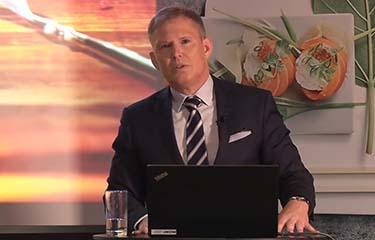
Photo courtesy of SalMar
