





Indonesia’s seafood industry has faced myriad challenges over the past few years.
Fluctuating tariffs, U.S. marine mammal protection rulings, increasing regulations in the E.U., heavy competition in China, an intensifying El Niño weather pattern, and radioactivity detected in shrimp shipments have all forced the country’s seafood sector to restrategize several times over.
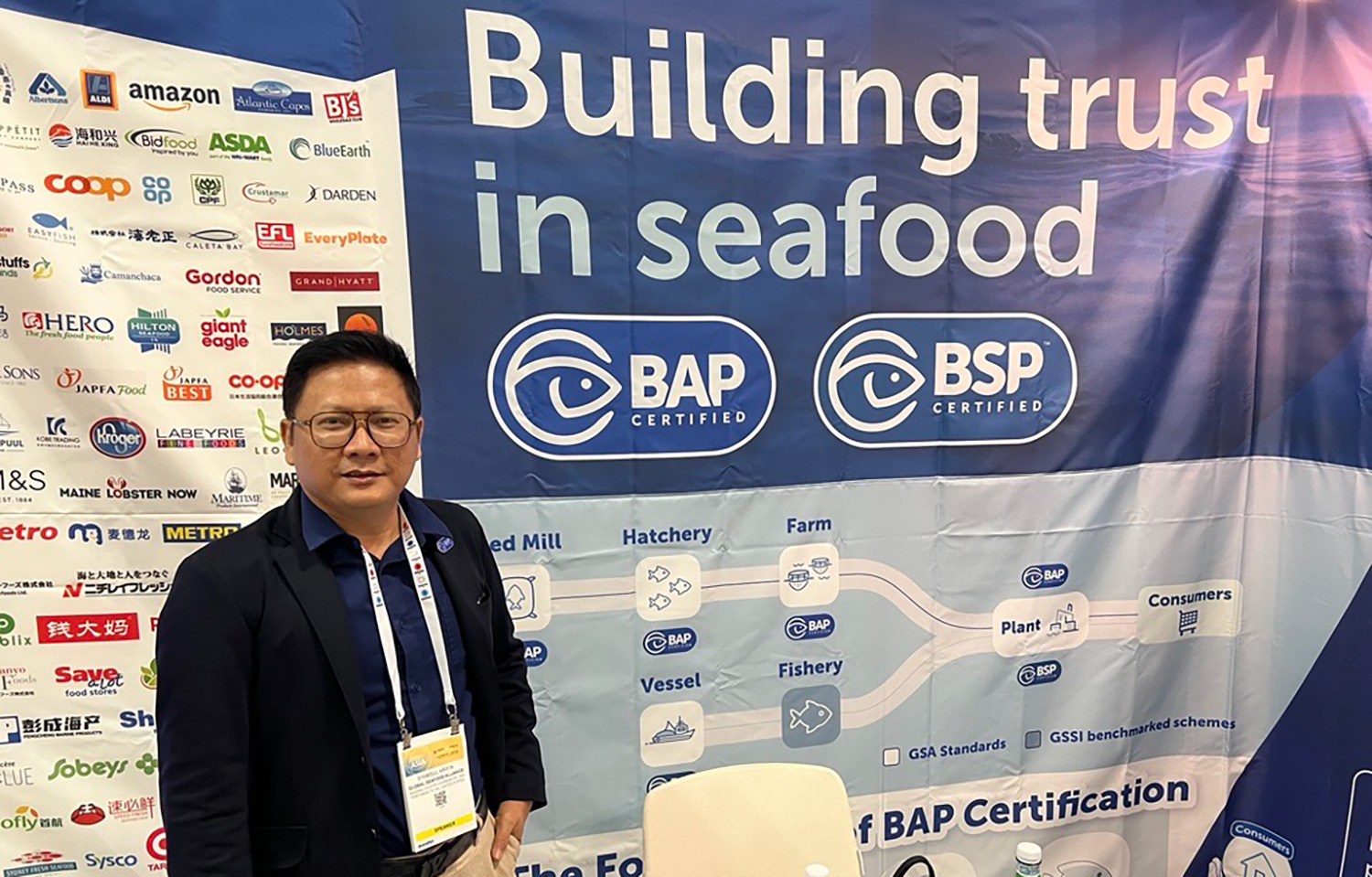
According to Syamsul Arifin, the country coordinator for Indonesia at the Global Seafood Alliance, these obstacles have put strain on the nation’s seafood supply chain but have also presented it with new opportunities.
“The last two years, challenges have pushed us but have made us stronger, too,” he told SeafoodSource at the 2026 Seafood Expo Asia in Singapore.
Arifin particularly pointed to the detection of radioactive isotope Cesium-137 (Cs-137) in shrimp exports to the U.S. last year, saying this resulted in a reputational hit from which the sector is still recovering.
The U.S. Food and Drug Administration (FDA) first found Cs-137 on shrimp shipments from Indonesia in August of last year, issuing an advisory to the public not to eat, sell, or serve imported shrimp processed by Indonesia-based PT. Bahari Makmur Sejati (BMS).
That initial detection was followed by a string of frozen shrimp recalls in the U.S. and a sweeping FDA import alert on shrimp, as well as import restrictions from markets like Saudi Arabia, that disrupted trade and sparked consumer concerns. Officials in the U.S. also used the incident to publicly call for more scrutiny of shrimp imports.
The FDA has allowed Indonesian shrimp shipments to resume for nearly a year now, but on 5 October, it decided to maintain an import alert on shrimp from the country, as well as an outright ban on supply from BMS, despite the fact that Indonesian shrimp suppliers are substantially meeting agency requirements.
Arifin said Indonesian stakeholders continue to work closely with the FDA, and now, the bigger battle is ensuring buyers regain trust in Indonesian supply.
“Producing good seafood is not enough; we need to demonstrate that our products are safe to eat, traceable, accountable, and environmentally responsible,” he said
One way the sector can do that, he explained, is by becoming a trailblazer in food safety.
“We are setting up new protocols we did not have before, such as a radioactive-free certification where every single container and products are guaranteed to be safe. We would become the one and only country to have a radioactivity protocol. If something similar were to happen to another country in the future, they could learn from Indonesia,” he said.
As the sector aims to improve its reputation in the U.S. and elsewhere, Arifin said it is counting on its own domestic market and its regional neighbors, most of which have burgeoning middle classes increasingly buying seafood, to absorb more supply.
“Right after the radioactive issue, a lot of high-quality shrimp supply could not be absorbed by the U.S. The price dropped, and domestic buyers, including my wife, were happy with that and bought a lot of shrimp. That helped people understand that their own country’s shrimp has international quality, and now, the domestic market is emerging,” he said. “Southeast Asia more widely is also becoming an increasingly important market for Indonesian seafood, particularly shrimp.”
Beyond the shrimp sector, Arifin said this year’s worsening El Niño weather pattern is set to affect all aspects of the country’s seafood sector, including both wild capture and aquaculture operations. In preparation, he explained stakeholders up and down the supply chain, along with government officials, are developing adaptation strategies that will help “reduce the risks.”
“The fishermen are now receiving government forecasts on fish migration patterns, giving them a warning,” he said, though cautioning that Indonesia’s geographical makeup as an archipelago with over 17,000 islands makes it difficult to send accurate data in real time. “Farmers, meanwhile, are trying to determine the right time to do early harvests. For example, three cycles might become two cycles, and they will look for other ways to better maintain control as El Niño deepens.”
Arifin said that tuna fishers, especially those fishing for bluefin, are likely to experience negative effects from the weather pattern as the highly migratory fish seek more comfortable waters.
“The market will probably drop but hopefully not significantly,” he said.
As it navigates several issues, the sector is receiving some relief from government initiatives, including programs aimed at scaling up aquaculture production, modernizing fishing vessels and villages, improving cold storage capabilities, and offering fuel subsidies.
“We want to make sure these are not just one-time programs. Not only hardware, it’s important that software is also improved,” Arifin said.
